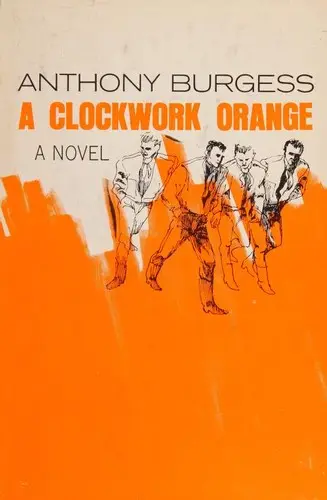
Kubrick's film of Burgess's novel, and the truncation is the whole story of the relationship. Burgess wrote twenty-one chapters, the last of which has Alex grow tired of violence and want a son. His American publisher cut it, and the US edition Kubrick worked from ends at chapter twenty, with Alex restored to himself and glad of it. So the film's notorious ending is faithful to the book Kubrick read and unfaithful to the book Burgess wrote. Burgess spent years saying so, and came to resent that the film was the version the world knew. Everything else transfers intact: Nadsat, the Ludovico technique, the first-person address to the reader that becomes Alex's voiceover.