
Percival Everett's James retells Twain's Adventures of Huckleberry Finn from the side of Jim, the enslaved man fleeing down the Mississippi with Huck.
Book· 1884· Adventure
by Mark Twain
Adventures of Huckleberry Finn: 2 recorded works trace back to it, and it draws on 3 recorded sources.
Works that record this one as a source, with the evidence a contributor gave.
Percival Everett's James retells Twain's Adventures of Huckleberry Finn from the side of Jim, the enslaved man fleeing down the Mississippi with Huck.

Peter Straub said "Twain was on our minds at the start", and the novel opens with epigraphs from Huckleberry Finn. Jack Sawyer's journey west across America with Wolf, a companion the world treats as an outcast, is built on Huck's journey with Jim, down to the idea of lighting out for the Territories.
The works this one is recorded as drawing on.

Twain names Don Quixote in the novel: Tom Sawyer stages his gang's raids out of romances and, when Huck sees only a Sunday-school picnic, blames enchanters, "if I warn't so ignorant, but had read a book called Don Quixote". Tom is Twain's Quixote, Huck his Sancho.
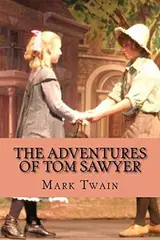
Twain's sequel to Tom Sawyer, narrated by Huck, who opens by referring the reader to the earlier book.
Events, places, movements and ideas outside fiction that this work is recorded as drawing on.
Real world
The novel is set along the Mississippi in the 1840s, when slavery was legal in Missouri, and follows Huck helping Jim escape slavery; Twain grew up in a slaveholding town and wrote it after Reconstruction had failed.