Animated Series· 2005· Fantasy

Avatar: The Last Airbender

by Michael Dante DiMartino, Bryan Konietzko

Avatar: The Last Airbender: 1 recorded work traces back to it, and it draws on 8 recorded sources.

Open on the map

What Avatar: The Last Airbender influenced

Works that record this one as a source, with the evidence a contributor gave.

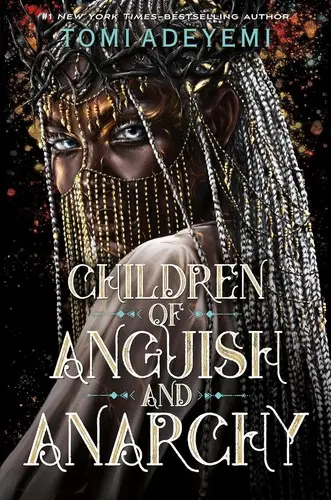
Legacy of Orisha

Book · 2024

InfluenceHIGH

Tomi Adeyemi has named Avatar constantly as the thing Children of Blood and Bone was written from, alongside her decision to build the magic out of West African orisha rather than out of European material. What carries: magic divided into elemental disciplines with their own training and cultures; a state that has outlawed and hunted the people who hold it; a teenage protagonist travelling with a small group to restore it; and a royal sibling pair on the other side, one of whom is a decent person trapped inside a monstrous father's project. Adeyemi has also talked about the animation's action grammar shaping how she writes the fights on the page.
What influenced Avatar: The Last Airbender

The works this one is recorded as drawing on.

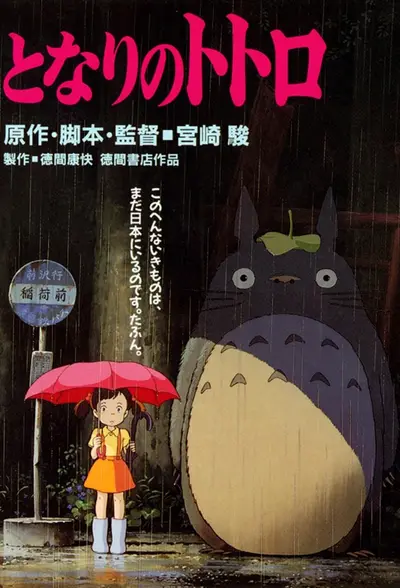
となりのトトロ My Neighbor Totoro

Animation · 1988

InfluenceLOW

Appa's six-legged design from Avatar: The Last Airbender was a direct homage to the Catbus from Hayao Miyazaki's My Neighbor Totoro. The show's creators and artists noted that figuring out the anatomy of a multi-legged mammal was tough, so they looked directly to the iconic six-legged Catbus for inspiration when designing Appa's body and movement. While Appa is officially a hybrid of a bison and a manatee, his structure and multi-legged shuffle heavily echo the classic Studio Ghibli creation.

Real-world influences

Events, places, movements and ideas outside fiction that this work is recorded as drawing on.

Sport & Competition

Real world

Real-world influenceHIGH
  • Martial arts

The four bending arts are based directly on four distinct styles of Chinese martial arts, supervised by Sifu Kisu to ensure technical authenticity:

  • Waterbending: Based on Tai Chi, emphasizing fluid movement, redirection of energy, and control over force rather than brute aggression.

  • Earthbending: Based on Hung Ga, focusing on strong, low stances, heavy grounding, and powerful strikes. (Toph's unique style uses Southern Praying Mantis, reflecting her reliance on ground vibrations).

  • Firebending: Based on Northern Shaolin, characterized by explosive movements, dynamic kicks, and long-range linear attacks.

  • Airbending: Based on Baguazhang, utilizing circular footwork, evasion, and constant motion to turn an opponent's energy back on them.
Culture

Real world

Real-world influenceMEDIUM
  • Circumpolar cultures

The Water Tribes are inspired by Inuit, Yupik, and indigenous Circumpolar cultures, seen in their clothing, architecture (igloos/ice carving), and reliance on sea hunting.

Culture

Real world

Real-world influenceMEDIUM
  • Imperial China

The Earth Kingdom draws heavily from Imperial China (Ming and Qing Dynasties), featuring landmark architecture like the Forbidden City (Ba Sing Se) and the Great Wall.

Culture

Real world

Real-world influenceMEDIUM
  • Central Asian monasticism

The Air Nomads are modelled on Tibetan Buddhist monks and Hindu monastic traditions, emphasizing detachment, spiritual enlightenment, and vegetarianism.

Culture

Real world

Real-world influenceMEDIUM
  • Meiji-era Japan

The Fire Nation is modelled on Meiji-era industrializing Japan, reflecting rapid technological advancement, naval supremacy, and imperial expansionism.

About the work

Avatar: The Last Airbender

With the Fire Nation on the brink of global domination, a young boy reawakens after a hundred-year absence. To save his war-torn world he must accept his destiny as the Avatar before it's too late.