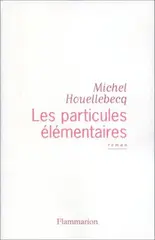
Houellebecq's characters argue about Brave New World by name, one of them calling Huxley's world not a nightmare but a paradise, and the novel ends with the kind of engineered, cloned humanity Huxley imagined, presented as a happy ending.
Book· 1932· Science Fiction
Brave New World: 3 recorded works trace back to it, and it draws on 8 recorded sources.
Works that record this one as a source, with the evidence a contributor gave.
Houellebecq's characters argue about Brave New World by name, one of them calling Huxley's world not a nightmare but a paradise, and the novel ends with the kind of engineered, cloned humanity Huxley imagined, presented as a happy ending.
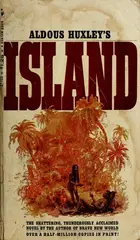
Huxley wrote Island, his last novel, as the utopian counterpart to Brave New World: a society that uses drugs and conditioning to free people rather than pacify them.
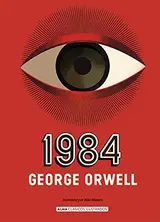
Huxley taught Orwell French at Eton, and on 1984's publication wrote to him contrasting the two dystopias; Orwell's novel is routinely read as the answer to Huxley's, rule by fear against rule by pleasure. LOW: Orwell named Zamyatin's We, not Huxley, as his model.
The works this one is recorded as drawing on.
Huxley said Brave New World began as a parody of Men Like Gods: Wells's hopeful utopia gave him the idea, and he told a friend he had been "pulling the leg of H. G. Wells" before his own ideas took over.
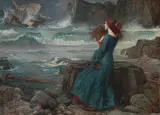
The title is Miranda's line from The Tempest, and John the Savage, raised on Shakespeare, speaks his feelings through it, so that "brave new world" turns bitterly ironic as the novel goes on.
Huxley said Brave New World was inspired by Wells's utopian novels, A Modern Utopia among them, which his negative utopia turns inside out. Men Like Gods is the book he named as the target of the parody, hence MEDIUM here.
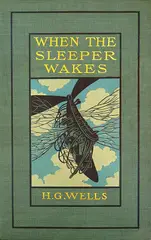
Huxley called Brave New World a "negative utopia", somewhat influenced by Wells's The Sleeper Awakes: corporate tyranny and behavioural conditioning.
George Orwell said Brave New World must be partly derived from We; Huxley denied it. Disputed, hence LOW.
Events, places, movements and ideas outside fiction that this work is recorded as drawing on.
Real world
Shortly before writing it Huxley toured Alfred Mond's Billingham plant, which gave Mustapha Mond his name; on his 1926 trip to America he read Henry Ford's My Life and Work on the boat and saw its principles everywhere after San Francisco.
Real world
Huxley's World State counts years After Ford and worships Henry Ford as a god: the mass production of the assembly line is applied to human beings, bred in hatcheries into castes.
Real world
Huxley was outraged by the commercial cheeriness and youth culture he met in America.