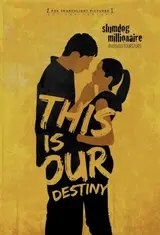
Danny Boyle has named City of God as the film that shaped Slumdog Millionaire: the kinetic, handheld camera through the slums, children cast from the neighbourhoods, and a life story told across time through violence and luck.
Film· 2002· Drama
Cidade de Deus (City of God): 4 recorded works trace back to it, and it draws on 2 recorded sources.
Works that record this one as a source, with the evidence a contributor gave.
Danny Boyle has named City of God as the film that shaped Slumdog Millionaire: the kinetic, handheld camera through the slums, children cast from the neighbourhoods, and a life story told across time through violence and luck.
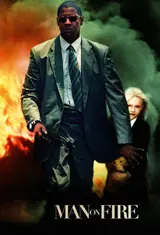
Tony Scott cited City of God as an influence on Man on Fire's style, and cast Gero Camilo and Charles Paraventi as a nod to their roles in it. Roger Ebert also saw City of God in its jagged photography and editing.

Production designer Jang Lee named City of God, with Do the Right Thing and The Jungle Book, among the key inspirations for the film's look.
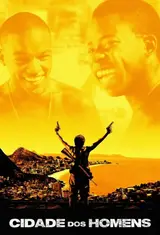
The works this one is recorded as drawing on.
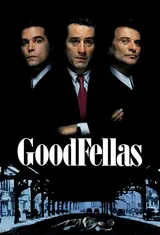
Meirelles has spoken about Scorsese while describing how the film was cut, and the borrowed grammar is easy to list: a narrator who was there and survived, a freeze frame that stops to introduce somebody, chapter titles, a decade crossed in a montage, and a child's admiration for men who will not live long. What City of God adds is that its narrator never joins: Rocket wants a camera, not a gun, and that is the film's exit from the form it borrowed.
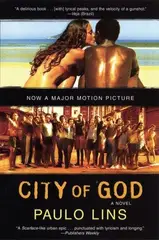
Fernando Meirelles and Kátia Lund's film adapts Paulo Lins's novel of the Cidade de Deus favela in Rio from the 1960s to the 1980s, narrated by Rocket, who becomes a photographer. Bráulio Mantovani's script compresses the book's huge cast.