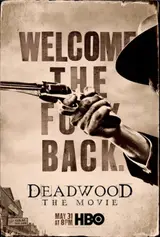
TV Series· 2004· Western
Deadwood
by David Milch
Deadwood: 1 recorded work traces back to it, and it draws on 1 recorded source.
What Deadwood influenced
Works that record this one as a source, with the evidence a contributor gave.
Real-world influences
Events, places, movements and ideas outside fiction that this work is recorded as drawing on.
History
Real world
Real-world influenceHIGH
- Deadwood, Dakota Territory (1876)
- The Black Hills Gold Rush
Almost everybody in it is a real person, and David Milch worked from the camp's own records: Seth Bullock, Al Swearengen, Wild Bill Hickok, Calamity Jane, Charlie Utter, E. B. Farnum and George Hearst all existed and were in Deadwood at roughly the time the series says. The premise is a documented anomaly. Deadwood was built on land treaty-guaranteed to the Lakota, so the camp had no legal standing, no law and no property rights that any court would recognise, and the series is about people inventing institutions from nothing while knowing annexation is coming. The famous profanity is a deliberate substitution: Milch has explained that period swearing was blasphemous rather than obscene and would read as quaint, so he replaced it with something that lands the same way now.