
Asghar Farhadi's couple are actors playing Willy and Linda Loman in a Tehran production of Death of a Salesman, and the play's scenes run alongside and comment on the story of the assault and its aftermath.
Play· 1949· Drama
Death of a Salesman: 1 recorded work traces back to it, and it draws on 2 recorded sources.
Works that record this one as a source, with the evidence a contributor gave.
Asghar Farhadi's couple are actors playing Willy and Linda Loman in a Tehran production of Death of a Salesman, and the play's scenes run alongside and comment on the story of the assault and its aftermath.
The works this one is recorded as drawing on.
Miller wrote about his debt to Ibsen for fifty years and adapted An Enemy of the People the year after Salesman opened, which is as direct a statement of allegiance as a playwright makes. What he took is Ibsen's method: a household in an ordinary sitting room, a past that has been paid for in secret, and a play whose action is the arrival of the bill. Ibsen builds the whole of A Doll's House on a forged signature years old; Miller builds Salesman on Willy's Boston hotel room and Biff finding out. The difference Miller insisted on is the form. Ibsen keeps to the room and the clock; Salesman lets the past walk on stage and share it, which is the thing Ibsen made possible and did not do.
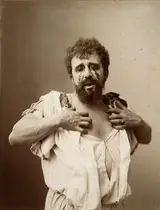
Miller published the argument. Tragedy and the Common Man appeared in the New York Times in February 1949, weeks after Salesman opened, and it is a direct answer to the critics who said a salesman was too small to be tragic. His case is that the classical requirement of rank is an accident of who was writing, not a law: the tragic feeling comes from a man laying down his life to secure his sense of personal dignity, and a salesman can do that as completely as a king. Willy's insistence that he is well liked is the flaw held in exactly the place Sophocles puts Oedipus's certainty. Recorded as a reaction rather than an influence because the play is written to contradict the model, and because Miller said so in print at the time.