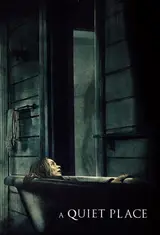
Krasinski named Get Out, with Don't Breathe, as part of his research before directing: recent horror carrying a commentary on society.
Film· 2017· Horror
by Jordan Peele
Get Out: 1 recorded work traces back to it, and it draws on 5 recorded sources.
Works that record this one as a source, with the evidence a contributor gave.
Krasinski named Get Out, with Don't Breathe, as part of his research before directing: recent horror carrying a commentary on society.
The works this one is recorded as drawing on.

Jordan Peele has named Rosemary's Baby repeatedly as a direct model, and it is the film he points at when he explains what social horror is: the threat is a polite social circle, and the victim's problem is that nobody believes them. What Get Out takes:
Filed HIGH: the mechanism, the reveal and the reason the audience cannot warn anyone are all Levin's and Polanski's, moved from a Manhattan apartment building to a house in the suburbs.
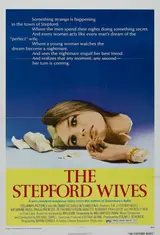
Jordan Peele has repeatedly named The Stepford Wives as a template: a polite, wealthy suburb whose smiling residents hide a procedure that turns people into vessels. He described Get Out as doing for race what Stepford did for gender.
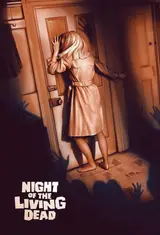
Jordan Peele has named Night of the Living Dead as a direct inspiration and, in The New York Times, traced the links between its hero Ben, the lone Black man in a besieged house, and Get Out's Chris.
Jordan Peele named The Stepford Wives as a model for Get Out ("The Stepford Wives meets The Help"): a protagonist driven to an out-of-the-way place who uncovers a body-replacement plot. Chris's job as a photographer is his tribute to Joanna.
Events, places, movements and ideas outside fiction that this work is recorded as drawing on.
Real world
Jordan Peele made the film as a horror story about racism in liberal America, following a Black man visiting his white girlfriend's family, whose friendliness hides something worse.