Book· 1851· Adventure

Moby Dick

by Herman Melville

Moby Dick: 2 recorded works trace back to it, and it draws on 4 recorded sources.

Open on the map

What Moby Dick influenced

Works that record this one as a source, with the evidence a contributor gave.

Jaws

Film · 1975

InfluenceMEDIUM

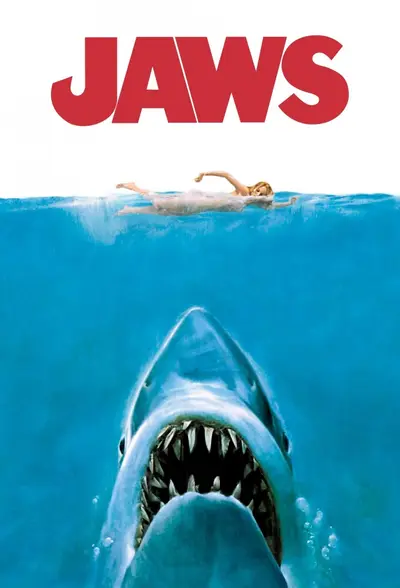
Quint is Ahab, and the film knows it: a captain who has made the hunt personal, a crew of three on a boat too small, a refusal to turn back, and a death inside the animal's mouth. Robert Shaw played Quint reading Melville in an early draft, and Spielberg has talked about the Melville frame while explaining what he cut. The Indianapolis speech is the film's own version of Ahab's history with the whale, a wound that explains the obsession.
Star Trek (original films)

Film · 1979

InfluenceLOW

Nicholas Meyer wrote Khan in The Wrath of Khan as Ahab, and put the novel on his shelf to say so.

  • Khan's last words are Ahab's: "From hell's heart I stab at thee"
  • A captain destroys himself and his crew chasing one enemy across space
  • Meyer has discussed the Melville model in interviews and in his memoir

Filed LOW because it shapes one film of six.

What influenced Moby Dick

The works this one is recorded as drawing on.

Bible Holy Bible

Scripture · 400

InfluenceHIGH

Rather than retelling biblical stories, Moby-Dick uses the Bible as a framework for exploring profound philosophical and spiritual questions. Melville draws on biblical names, symbols, stories, and language to ask whether humans can understand the meaning of suffering, confront evil, or challenge the divine order. The novel ultimately suggests that some mysteries—like God, nature, and the whale itself—remain beyond human comprehension.

Paradise Lost

Poetry · 1667

InfluenceMEDIUM

Milton's epic about Satan's rebellion against God strongly influenced Ahab. Like Satan: Ahab is proud and defiant. He refuses to submit to a higher power. His determination is both admirable and self-destructive. Some critics even call Ahab a "Miltonic hero."

Real-world influences

Events, places, movements and ideas outside fiction that this work is recorded as drawing on.

Nature & Animals

Real world

Real-world influenceHIGH
  • Sperm Whales
  • Whaling
  • The Open Ocean

Melville sailed on a whaler and the book is made out of it. He shipped aboard the Acushnet out of Fairhaven in 1841 and spent eighteen months in the Pacific fishery before jumping ship in the Marquesas. What that put in the novel is not atmosphere, it is content. Roughly a third of Moby-Dick is cetology: the anatomy of the sperm whale, the difference between its head and a right whale's, the blubber, the spermaceti, the try-works, the line, the boats. The chapters are written as natural history and several of them are. Two real events sit underneath the plot: the sinking of the Essex by a sperm whale in 1820, which Melville read Owen Chase's account of and met Chase's son at sea; and Mocha Dick, an actual white bull whale off Chile that survived repeated attacks and was written up in 1839.

Personal Experiences

Real world

Real-world influenceHIGH
  • His Own Voyage on the Acushnet (1841)
  • Eighteen Months in the Pacific Fishery

Melville sailed on a whaler, and the book is made out of it. He shipped aboard the Acushnet out of Fairhaven in January 1841, spent eighteen months in the Pacific fishery, and jumped ship in the Marquesas. That is where the working detail comes from: the watches, the ranks, the boats, the mechanics of cutting in and trying out, the crew drawn from everywhere on earth. It is also where the anger comes from, since he wrote about the conditions aboard more than once and did not have to imagine them. He read Owen Chase's account of the sinking of the Essex at sea, and met Chase's son on another whaler in the Pacific. The two facts that the novel is built on reached him in person rather than in a library.

About the work

Moby Dick

"Command the murderous chalices! Drink ye harpooners! Drink and swear, ye men that man the deathful whaleboat's bow -- Death to Moby Dick!" So Captain Ahab binds his crew to fulfil his obsession -- the destruction of the great white whale. Under his lordly but maniacal command the Pequod's commercial mission is perverted to one of vengeance. To Ahab, the monster that destroyed his body is not a creature, but the symbol of "some unknown but still reasoning thing." Uncowed by natural disasters, ill omens, even death, Ahab urges his ship towards "the undeliverable, nameless perils of the whale."