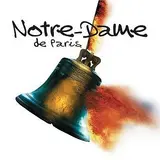
Riccardo Cocciante and Luc Plamondon's musical adapts Victor Hugo's novel: Esmeralda, Quasimodo, Frollo and Phoebus, told largely through song.
Book· 1831· Historical
by Victor Hugo
Notre-Dame de Paris (The Hunchback of Notre Dame): 2 recorded works trace back to it, and it draws on 1 recorded source.
Works that record this one as a source, with the evidence a contributor gave.
Riccardo Cocciante and Luc Plamondon's musical adapts Victor Hugo's novel: Esmeralda, Quasimodo, Frollo and Phoebus, told largely through song.
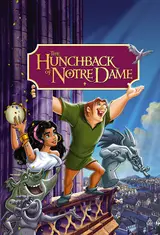
Disney's The Hunchback of Notre Dame adapts Victor Hugo's novel, softening its ending.
Events, places, movements and ideas outside fiction that this work is recorded as drawing on.
Real world
Hugo wrote the novel partly to save Gothic Paris: he wanted to make the public value Notre-Dame, then neglected and badly restored, and the book includes a whole chapter on the cathedral's architecture. Its success led to the restoration.