BookSeries· 1950· Fantasy

The Chronicles Of Narnia

by C. S. Lewis

The Chronicles Of Narnia: 9 recorded works trace back to it, and it draws on 5 recorded sources.

Open on the map

What The Chronicles Of Narnia influenced

Works that record this one as a source, with the evidence a contributor gave.

His Dark Materials

Book · 1995

Reaction againstHIGH

Philip Pullman has said that His Dark Materials was written partly in response to Lewis's Christian worldview. Factually, the influence includes: Thematic Influence (strongest): Pullman deliberately challenges the Christian themes of The Chronicles of Narnia. Where Lewis presents obedience, faith, and redemption positively, Pullman emphasizes free inquiry, individual choice, and skepticism toward religious authority. Narrative Influence: Both series feature children traveling between multiple worlds, but Pullman uses this structure to explore different philosophical questions. Genre Influence: His Dark Materials builds on the tradition of children's portal fantasy established by works such as The Chronicles of Narnia, while taking the genre in a more complex, secular direction. Foundational Influence: Pullman has described his trilogy as, in part, an answer to Lewis's series. Rather than imitating Narnia, he sought to offer an alternative moral and philosophical vision. Character Influence: Pullman's Authority and religious institutions can be read as inversions of Lewis's benevolent divine order, although they are not direct counterparts to individual Narnia characters. The influence is therefore best described as a critical response rather than an imitation. Pullman borrowed the broad framework of children's fantasy involving parallel worlds but intentionally reworked it to express ideas that contrast with those of Lewis.
The Magicians

Book · 2009

InfluenceHIGH
  • Fillory - Narnia: The fictional magical land of Fillory in Grossman's universe is an explicit stand-in for Narnia. Like Narnia, Fillory was created by two animal gods (Ember and Umber, playing the role of Aslan) and is accessed by British siblings (the Chatwins, parallel to the Pevensies) who travel there from Earth through everyday portals (like a grandfather clock rather than a wardrobe).
  • The "Neitherlands": In The Magicians, the hub world connecting different dimensions via pools of water is a direct nod to the Wood Between the Worlds from C.S. Lewis’s The Magician's Nephew.
  • Tackling Morality and Trauma: Where Lewis used Narnia as a Christian allegory where good and evil are clear, Grossman reframes portal fantasy to examine clinical depression, addiction, sexual trauma, and the sobering reality that magic doesn't automatically fix internal human unhappiness.
  • From the author:
  • "My work on these books really began when I was 8 and I picked up The Lion, the Witch and the Wardrobe. I've always been deeply drawn to Lewis's work... I wrote the first draft of* The Magicians, and they went to Narnia, so it used to be much more directly an engagement with Narnia. I don't think of it as an homage or a critique; maybe it's both, I don't know. I always wanted to talk back to C.S. Lewis."*
Piranesi

Book · 2020

InfluenceHIGH

Susanna Clarke opens the novel with an epigraph from The Magician's Nephew, and its villain, Valentine Andrew Ketterley, shares his name with that book's magician Andrew Ketterley. The endless House echoes the Wood between the Worlds, and a dream of a faun in a snowy forest speaking to a girl is Tumnus and Lucy.

Harry Potter

Book · 1997

InfluenceMEDIUM

Narnia likely influenced Harry Potter indirectly by helping establish the modern tradition of children's fantasy in which young protagonists enter a magical world and confront profound moral choices. However, Rowling has not identified it as a primary source for her story or world, and Harry Potter ultimately develops its own distinct style, mythology, and narrative structure.

Bridge to Terabithia

Book · 1977

InfluenceMEDIUM

Leslie names the children's imaginary kingdom Terabithia after Terebinthia, an island in Narnia, and the Narnia books are what she lends Jess to show him how such a kingdom works. Katherine Paterson has said the name came from Lewis.

Neverwhere

Book · 1996

InfluenceMEDIUM

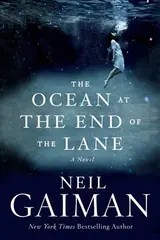
Gaiman names the Narnia books, with Alice, as what he wanted Neverwhere to be for adults, and has described it as Narnia on the Northern Line: an ordinary man stepping through into a hidden world beneath the familiar one.

What influenced The Chronicles Of Narnia

The works this one is recorded as drawing on.

Bible Holy Bible

Scripture · 400

InfluenceHIGH

C. S. Lewis described the series as imagining how Christian ideas might appear in a different world rather than as a strict allegory. Factually, the Bible influenced Narnia in these ways: Thematic Influence (strongest): The series explores biblical themes such as creation, sacrifice, redemption, resurrection, temptation, forgiveness, judgment, and eternal life. Character Influence: Aslan is a fictional counterpart to Jesus Christ in the world of Narnia. His sacrificial death and resurrection in The Lion, the Witch and the Wardrobe parallel the crucifixion and resurrection of Christ. Narrative Influence: Several major storylines parallel biblical events. For example: The Magician's Nephew includes a creation story inspired by Genesis. The Last Battle draws on the Book of Revelation, depicting the end of Narnia, final judgment, and a new, perfect world. Worldbuilding Influence: Narnia has a moral order established by Aslan, reflecting the biblical concept of a universe created and governed by God. Foundational Influence: Christian theology forms the philosophical foundation of the series. Lewis stated that the books began with images rather than a plan to retell the Bible, but Christian belief shaped the world and its stories throughout.

Phantastes

Book · 1858

InfluenceMEDIUM

C. S. Lewis wrote that reading Phantastes as a young man "baptised" his imagination, and he treated MacDonald as his master all his life, even making him his guide in The Great Divorce. Narnia inherits MacDonald's way of writing fairy tales in which the magic is a vehicle for holiness.

The Worm Ouroboros

Book · 1922

InfluenceMEDIUM

Lewis was one of Eddison's greatest champions. While Narnia itself doesn't closely resemble The Worm Ouroboros, Lewis's respect for Eddison reinforced his belief that fantasy could be serious literature and is part of his foundation into creating secondary fantasy worlds.

Real-world influences

Events, places, movements and ideas outside fiction that this work is recorded as drawing on.

Mythology & Folklore

Real world

Real-world influenceHIGH
  • Biblical stories

C. S. Lewis's Aslan dies in Edmund's place and rises again, and the last book ends with a new heaven, retelling the Christian story in Narnia.