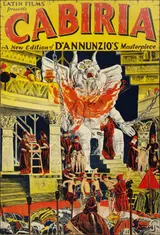
Giovanni Pastrone's Cabiria, set in the Second Punic War, drew on Flaubert's Carthaginian novel Salammbô for its vision of Carthage and its sacrifice to Moloch.
Book· 1862· Historical
Salammbô: 1 recorded work traces back to it, and it draws on 1 recorded source.
Works that record this one as a source, with the evidence a contributor gave.
Giovanni Pastrone's Cabiria, set in the Second Punic War, drew on Flaubert's Carthaginian novel Salammbô for its vision of Carthage and its sacrifice to Moloch.
Events, places, movements and ideas outside fiction that this work is recorded as drawing on.
Real world
Flaubert set the novel in Carthage during the Mercenary War of 241 to 237 BC, drawing on Polybius and his own journey to Tunisia to reconstruct the city.