
Nolan and David S. Goyer have named Loeb and Sale's The Long Halloween as a source for The Dark Knight: Batman, Gordon and Harvey Dent working together against the mob, and Dent's fall into Two-Face as the cost of that alliance.
FilmSeries· 2005· Action
The Dark Knight Trilogy: it draws on 5 recorded sources.
The works this one is recorded as drawing on.
Nolan and David S. Goyer have named Loeb and Sale's The Long Halloween as a source for The Dark Knight: Batman, Gordon and Harvey Dent working together against the mob, and Dent's fall into Two-Face as the cost of that alliance.

Batman Begins builds on Frank Miller and David Mazzucchelli's Year One: Bruce Wayne's return to a corrupt Gotham, Jim Gordon as an honest officer in a crooked department, and Falcone as the city's crime boss.
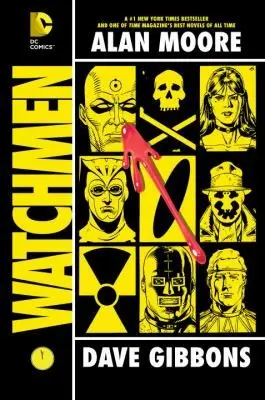
Nolan's trilogy is the first mainstream superhero cinema built on the premises Watchmen put into comics twenty years earlier: that a costumed vigilante is a political fact with consequences, that a city would react to him, and that the villain may be the one arguing coherently. The Dark Knight's ending is the Watchmen ending. A mass deception is chosen over the truth because the truth would undo the peace, and the film leaves the audience to decide whether that was right. Ozymandias and Gordon make the same bargain. Filed MEDIUM, and the limit stated: Nolan has cited Year One and The Long Halloween rather than Watchmen.
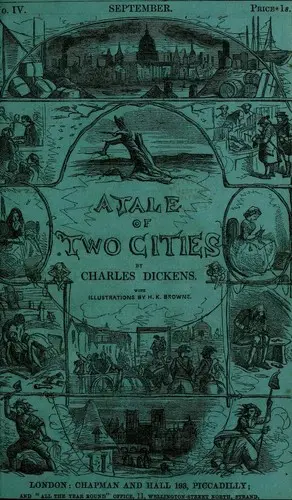
Christopher and Jonathan Nolan have named A Tale of Two Cities as the model for The Dark Knight Rises, and the film quotes it at the end: Gordon reads Sydney Carton's closing lines, "It is a far, far better thing that I do", at Bruce Wayne's funeral.
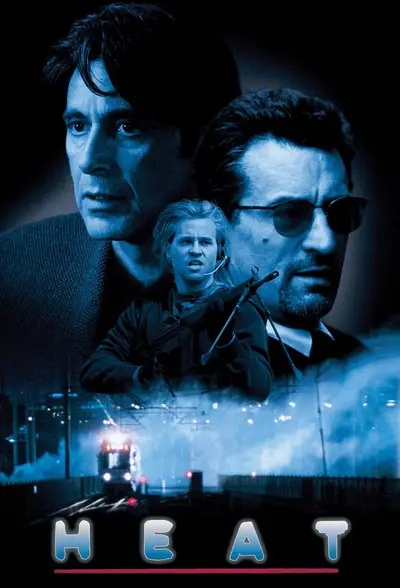
Christopher Nolan has named Michael Mann's Heat as a model for The Dark Knight: a crime epic about a city, with a daylight bank robbery staged with a crew in masks, and a relationship between hunter and hunted at its centre. The Dark Knight's opening heist is the clearest instance.