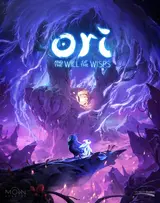
Moon Studios have cited the Nintendo lineage directly, and the structure is the shared part: a connected world gated by abilities rather than by level, where a new movement power reopens places you have already walked past.
Video GameSeries· 1986· Action
by 宮本 茂 Shigeru Miyamoto, 青沼 英二 Eiji Aonuma
ゼルダの伝説 (The Legend of Zelda): 4 recorded works trace back to it, and it draws on 2 recorded sources.
Works that record this one as a source, with the evidence a contributor gave.
Moon Studios have cited the Nintendo lineage directly, and the structure is the shared part: a connected world gated by abilities rather than by level, where a new movement power reopens places you have already walked past.
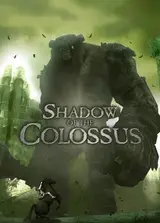
Fumito Ueda grew up wanting to make a game like Zelda, and designed the colossi as "inverted Zelda dungeons".
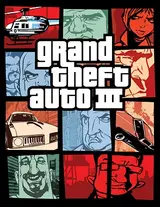
Sam Houser described Grand Theft Auto III as "Zelda meets Goodfellas", and cited the Legend of Zelda franchise as an influence.

CD Projekt Red has cited Zelda as an influence on The Witcher series.
The works this one is recorded as drawing on.
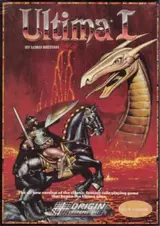
The Zelda team has credited the American computer RPGs, Ultima among them, for the shape of the overworld: a continuous top-down land explored freely, with dungeons set into it and equipment that changes where you can reach. Miyamoto's own stated starting point was different and personal, a childhood memory of finding a cave, and Zelda drops the things that make Ultima an RPG. There are no experience points, no classes, no party and no statistics. Filed MEDIUM for exactly that reason: the debt is to the exploration structure rather than to the rules.
Events, places, movements and ideas outside fiction that this work is recorded as drawing on.
Real world
Shigeru Miyamoto has said Zelda came from his childhood around Sonobe near Kyoto, exploring hills, woods and lakes, and once finding a cave he was afraid to go into.