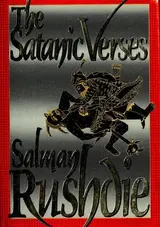
Rushdie has acknowledged Bulgakov's The Master and Margarita, with its devil loose in a modern city, as an influence on The Satanic Verses.
Book· 1928· Literary
by Михаил Афанасьевич Булгаков Mikhail Bulgakov
Мастер и Маргарита (The Master and Margarita): 1 recorded work traces back to it, and it draws on 3 recorded sources.
Works that record this one as a source, with the evidence a contributor gave.
Rushdie has acknowledged Bulgakov's The Master and Margarita, with its devil loose in a modern city, as an influence on The Satanic Verses.
The works this one is recorded as drawing on.
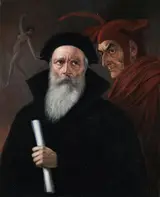
Bulgakov takes his epigraph from Goethe's Faust, Mephistopheles naming himself part of the power that always wills evil and always works good, and his devil Woland, whose name is one of Mephistopheles' in the play, visits Moscow as that power.
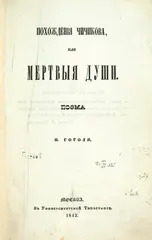
Bulgakov's satire bears the influence of Gogol's Dead Souls, which he adapted for the stage in 1931; the Master burning his manuscript echoes Gogol burning Part II of Dead Souls.
Events, places, movements and ideas outside fiction that this work is recorded as drawing on.
Real world
Bulgakov satirises Stalin-era Moscow: the literary bureaucracy of MASSOLIT, informers, disappearances and the housing shortage. His own plays were banned, and the Master's rejected novel mirrors that experience.