Book· 1350· Historical

三國演義 (The Romance of the Three Kingdoms)

by 蒋大器 Jiang Daqi

三國演義 (The Romance of the Three Kingdoms): 1 recorded work traces back to it, and it draws on 2 recorded sources.

Open on the map

What 三國演義 (The Romance of the Three Kingdoms) influenced

Works that record this one as a source, with the evidence a contributor gave.

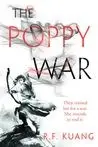
The Poppy War

Book · 2018

InfluenceMEDIUM

The trilogy's Trifecta, three sworn warriors who once ruled the Empire together, and its warlord politics of shifting alliances echo Romance of the Three Kingdoms, which R. F. Kuang has cited alongside the twentieth-century Chinese history its war is drawn from.

What influenced 三國演義 (The Romance of the Three Kingdoms)

The works this one is recorded as drawing on.

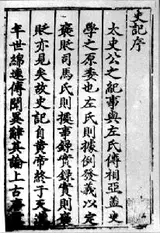
史記 Records of the Grand Historian

Nonfiction · -90

InfluenceMEDIUM

Sima Qian invented the form Chinese historical fiction has used ever since: history told as a series of lives, each a self-contained biography with speeches, private scenes and a judgement at the end, rather than as a single chronicle. The Three Kingdoms is built that way. It moves between figures, gives each an arc and a characteristic virtue or vice, and treats invented dialogue and reported thought as legitimate parts of a historical account, which is exactly what the Records had licensed. Its immediate source is Chen Shou's Records of the Three Kingdoms; the reason a novel could be made out of a history at all is Sima Qian's method.
Real-world influences

Events, places, movements and ideas outside fiction that this work is recorded as drawing on.

History

Real world

Real-world influenceHIGH
  • Three Kingdoms period

The novel dramatises the wars of the Three Kingdoms that followed the fall of the Han dynasty in the 3rd century.

About the work

三國演義 (The Romance of the Three Kingdoms)

Romance of the Three Kingdoms is a 14th-century Chinese historical novel attributed to Luo Guanzhong. Its narrative covers events from the decline of the Han dynasty and the Yellow Turban Rebellion to the reunification of China under the Western Jin in 280.