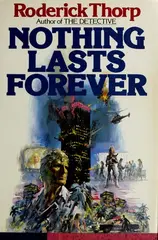
Roderick Thorp went home from The Towering Inferno and dreamed of a man trapped in a burning high-rise, chased by men with guns. The dream became Nothing Lasts Forever, the novel Die Hard adapts.
Film· 1974· Action
by John Guillermin, Irwin Allen
The Towering Inferno: 2 recorded works trace back to it, and it draws on 1 recorded source.
Works that record this one as a source, with the evidence a contributor gave.
Roderick Thorp went home from The Towering Inferno and dreamed of a man trapped in a burning high-rise, chased by men with guns. The dream became Nothing Lasts Forever, the novel Die Hard adapts.

The 1970s disaster film is the form Emmerich revived, and the inheritance is structural: a warning nobody in authority acts on, an ensemble whose private stories are intercut with the catastrophe, and set pieces staged as a sequence of survivable ordeals rather than as a single event. What changed is the scale and the tool. Inferno's tower is a practical set with stuntmen; The Day After Tomorrow's weather is computer generated and the jeopardy is planetary. The debt is to the template rather than to any scene, which is why it is weighted medium.
The works this one is recorded as drawing on.
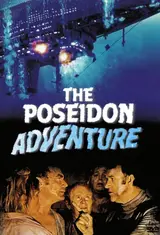
Irwin Allen produced both, two years apart, and the second is the first done bigger. Poseidon's survivors climb up through an upside-down ship; Inferno's climb down through a burning tower, and the physical logic of the ordeal is the same reversed. The cast structure is repeated deliberately: a large ensemble of names, an authority figure who is wrong, a practical outsider who is right, and deaths distributed so that nobody is safe. Inferno went further by combining two competing novels and two studios into one production, which was the industry's answer to how well Poseidon had done.