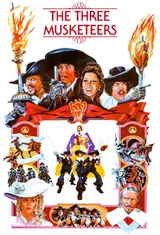
Richard Lester's film adapts the first half of Dumas's Les Trois Mousquetaires; the second half became The Four Musketeers (1974), shot at the same time.
BookSeries· 1844· Adventure
La Trilogie des Mousquetaires (The Musketeers Trilogy): 3 recorded works trace back to it, and it draws on 1 recorded source.
Works that record this one as a source, with the evidence a contributor gave.
Richard Lester's film adapts the first half of Dumas's Les Trois Mousquetaires; the second half became The Four Musketeers (1974), shot at the same time.
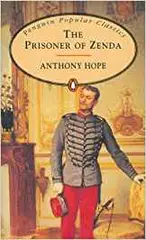
The Prisoner of Zenda is Dumas's swashbuckler moved to an invented country, which is the whole of Anthony Hope's contribution and a large one: the Ruritanian romance is named after his kingdom. From Dumas: court intrigue driving the plot, a monarchy whose succession is the stake, duelling as the way arguments end, a hero out of his class thrown among nobles, and loyalty valued above outcome. Hope's change is that the country is fictional, which frees the book from history and lets every later writer invent a small European kingdom and put a plot in it. Filed MEDIUM: an inherited form rather than a documented reading.

The Three Musketeers runs through the film: Jamal names Latika the third musketeer, and the last question asks for the third musketeer's name.
Events, places, movements and ideas outside fiction that this work is recorded as drawing on.
Real world
Dumas's musketeers serve Louis XIII against the schemes of Cardinal Richelieu, and d'Artagnan is based on a real officer.