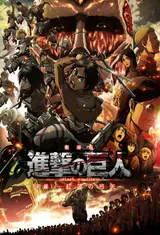
The anime, made by Wit Studio and then MAPPA, adapts Hajime Isayama's manga in order across four seasons, through to its ending.
MangaSeries· 2009· Science Fiction
by 諫山創 Hajime Isayama
進撃の巨人 (Attack on Titan): 2 recorded works trace back to it, and it draws on 4 recorded sources.
Works that record this one as a source, with the evidence a contributor gave.
The anime, made by Wit Studio and then MAPPA, adapts Hajime Isayama's manga in order across four seasons, through to its ending.
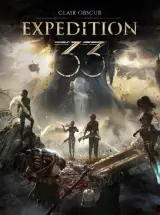
Sandfall Interactive cited the manga Attack on Titan, with Bleach and the anime Fire Force, among the works that influenced Expedition 33.
The works this one is recorded as drawing on.
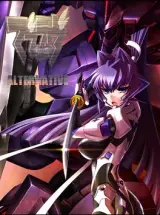
Hajime Isayama has said Muv-Luv Alternative, where humanity is nearly wiped out by giant alien creatures, was an influence on Attack on Titan.

The inheritance is a genre turned against itself. Evangelion took the giant-machine story and made the pilots damaged children under adult coercion, the organisation sinister, and the enemy a theological problem rather than an army. Isayama's manga applies the same treatment: walls that turn out to be a prison rather than a defence, a command structure lying to the people it protects, and a hero whose transformation into the thing he fights is the plot rather than a twist. Filed MEDIUM. Isayama has cited Muv-Luv more often than Evangelion, and what is shared here is a post-1995 posture toward the genre that Anno is generally credited with creating.
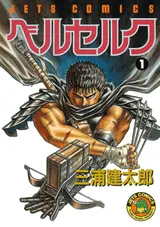
Isayama has named Berserk among the manga that shaped him, and the debt is tonal before it is visual: a dark fantasy where the protagonists are outmatched by design, named characters die without ceremony or arc, and the horror comes from enormous bodies doing something obscene to small ones. The Eclipse and the fall of Shiganshina are staged the same way, as a massacre the reader watches a survivor fail to prevent, and both series are about what somebody becomes afterwards.

Hajime Isayama said his carnivorous Titans drew in part on the dinosaurs of Jurassic Park.