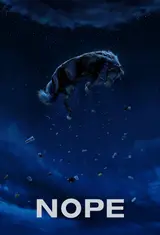
Jordan Peele named the Angels of Neon Genesis Evangelion as the principal inspiration for the film's premise and its creature, singling out the minimalist, biomechanical design of Sahaquiel, the tenth Angel.
Animated Series· 1995· Science Fiction
by 庵野秀明 Hideaki Anno
新世紀エヴァンゲリオン (Neon Genesis Evangelion): 8 recorded works trace back to it, and it draws on 4 recorded sources.
Works that record this one as a source, with the evidence a contributor gave.
Jordan Peele named the Angels of Neon Genesis Evangelion as the principal inspiration for the film's premise and its creature, singling out the minimalist, biomechanical design of Sahaquiel, the tenth Angel.
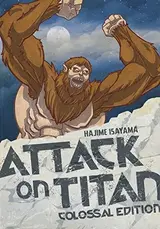
The inheritance is a genre turned against itself. Evangelion took the giant-machine story and made the pilots damaged children under adult coercion, the organisation sinister, and the enemy a theological problem rather than an army. Isayama's manga applies the same treatment: walls that turn out to be a prison rather than a defence, a command structure lying to the people it protects, and a hero whose transformation into the thing he fights is the plot rather than a twist. Filed MEDIUM. Isayama has cited Muv-Luv more often than Evangelion, and what is shared here is a post-1995 posture toward the genre that Anno is generally credited with creating.
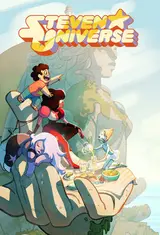
Sugar drafted several episodes as tributes and shot-for-shot homages to anime she loved, Neon Genesis Evangelion among them, as The Ringer reported.
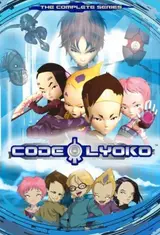
The creators of Code Lyoko named Neon Genesis Evangelion as an inspiration for its dangerous entities the young heroes must fight.
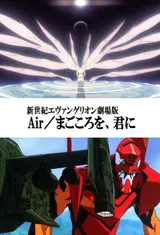
Animation · 1997
The End of Evangelion is the alternative ending to the series, retelling its last two episodes.
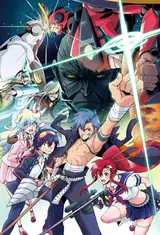
Simon's growth in Gurren Lagann was modelled in stages on earlier Gainax heroes, beginning with Shinji Ikari of Neon Genesis Evangelion.
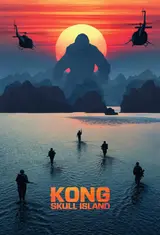
Vogt-Roberts also named Evangelion's first Angel as one of the creatures fused into the Skull Crawlers.
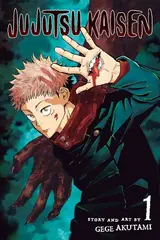
Gege Akutami has cited Evangelion as an inspiration for Jujutsu Kaisen.
The works this one is recorded as drawing on.
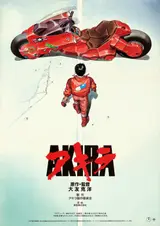
Akira is the film that made the 1990s Japanese animation industry commercially and visually possible, and Evangelion is built in the space it cleared. Concretely: a Tokyo rebuilt after an apocalypse whose cause is a government secret, a teenage subject of that secret programme whose power cannot be contained, and a climactic dissolution of a human body into something vast and undifferentiated. The Third Impact sequence and Tetsuo's transformation are the same idea filmed twice. Filed MEDIUM: a shared vocabulary within one industry, not a stated debt.
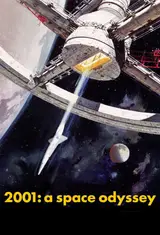
Anno has been open about Kubrick, and the last act of Evangelion is where it stops being subtext: a sequence of abstract light and colour, a protagonist dissolved and remade, and a closing image of a new kind of being. The series also borrows 2001's willingness to stop the plot entirely for several minutes of contemplation, which is not a normal thing for a Sunday evening robot show to do. Filed MEDIUM. Anno's named sources are mostly Japanese, and this is one strand.
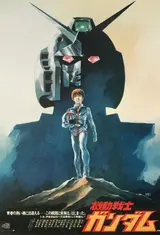
Hideaki Anno, who animated on Char's Counterattack, counted Mobile Suit Gundam among the series he drew on for Evangelion's teenage pilots and war machines.
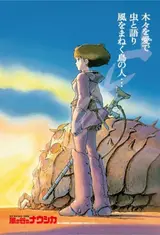
Hideaki Anno, who animated the God Warrior in Nausicaä, said he took inspiration from Miyazaki's film for Evangelion.