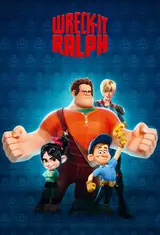
King Candy's voice is based on comedian Ed Wynn, and his mannerisms are modelled on Wynn's Mad Hatter in Disney's Alice in Wonderland.
Animation· 1951· Fantasy
by Clyde Geronimi, Wilfred Jackson, Hamilton Luske
Alice in Wonderland: 3 recorded works trace back to it, and it draws on 2 recorded sources.
Works that record this one as a source, with the evidence a contributor gave.
King Candy's voice is based on comedian Ed Wynn, and his mannerisms are modelled on Wynn's Mad Hatter in Disney's Alice in Wonderland.
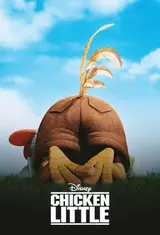
Chicken Little's team took its staging, colour and lighting from Mary Blair's background designs for Alice in Wonderland.
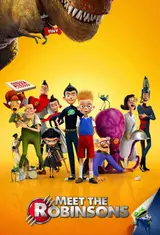
Meet the Robinsons' team took its inspiration from Disney animated classics, Alice in Wonderland among them.
The works this one is recorded as drawing on.
Disney's film adapts Carroll's two Alice books together, taking the White Rabbit, the pool of tears, the caucus race, the caterpillar, the Cheshire Cat, the tea party and the trial from Alice's Adventures in Wonderland, and Tweedledum and Tweedledee, the Walrus and the Carpenter and the talking flowers from Through the Looking-Glass. The merge is the adaptation's main decision and it is why the film has no plot to speak of: the books are episodic by design and the film keeps that rather than imposing a quest. Carroll's nonsense verse is largely kept, set as song lyrics.
Disney's film is built from BOTH Alice books, which is why it is worth recording separately from the 1865 one. Tweedledum and Tweedledee, the Walrus and the Carpenter, and the talking flowers are all from Through the Looking-Glass and none of them is in Wonderland. The film takes the characters and drops the chess structure they belong to.