Book· 1865· Fantasy

Alice in Wonderland

by Lewis Carroll

Alice in Wonderland: 8 recorded works trace back to it.

Open on the map

What Alice in Wonderland influenced

Works that record this one as a source, with the evidence a contributor gave.

Alice in Wonderland

Animation · 1951

AdaptationHIGH

Disney's film adapts Carroll's two Alice books together, taking the White Rabbit, the pool of tears, the caucus race, the caterpillar, the Cheshire Cat, the tea party and the trial from Alice's Adventures in Wonderland, and Tweedledum and Tweedledee, the Walrus and the Carpenter and the talking flowers from Through the Looking-Glass. The merge is the adaptation's main decision and it is why the film has no plot to speak of: the books are episodic by design and the film keeps that rather than imposing a quest. Carroll's nonsense verse is largely kept, set as song lyrics.
The Neverending Story was influenced by Alice's Adventures in Wonderland through its use of a child protagonist entering a separate fantasy world governed by symbolic rather than realistic logic. Both novels present the journey as one of personal discovery, with encounters that challenge the protagonist's understanding of identity and reality. Michael Ende also adopted Lewis Carroll's approach of using fantasy to explore philosophical and psychological ideas instead of focusing solely on adventure, although The Neverending Story develops these themes in its own distinct way.

千と千尋の神隠し Spirited Away

Animation · 2001

InfluenceMEDIUM

Miyazaki has named Alice among the books behind this one, and the shape is unmistakable: a bored girl passes through a threshold into a world with rules she must learn fast, meets a sequence of imperious creatures who are offended by ignorance of protocol, is told that eating and drinking will change what she is, and has to hold on to who she is in order to get home. Yubaba taking Chihiro's name is Carroll's wood where things have no names, made into the plot's central threat.

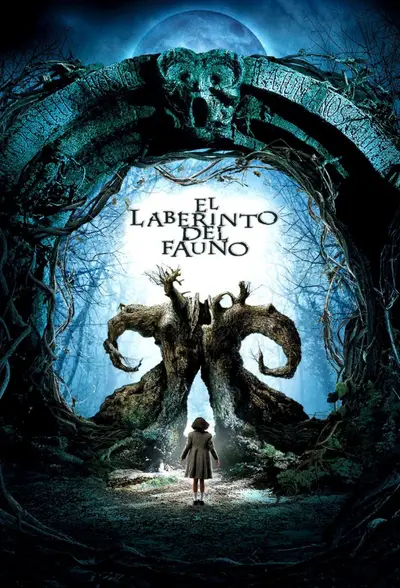
El laberinto del fauno Pan's Labyrinth

Film · 2006

InfluenceMEDIUM

Del Toro has spoken about Carroll and Victorian fairy tale illustration as sources, and Ofelia's underworld runs on Wonderland's logic: three tasks with rules stated precisely and then broken, a warning about eating what is on the table, and creatures who are neither friendly nor hostile but simply indifferent to a child's distress. The difference is what sits on the other side. Alice wakes up, and del Toro puts a fascist captain in the room instead.

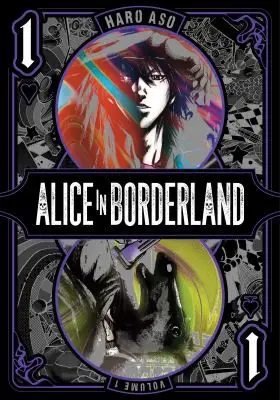
It is in the title and then in nearly every name. Arisu is Alice; Usagi is rabbit; the games are dealt as playing cards with suits that determine what kind of test they are, which is Carroll's court of cards turned into a system. The displacement is the same one, an ordinary young person dropped into a place governed by arbitrary rules administered with total seriousness, where the only way out is to play.

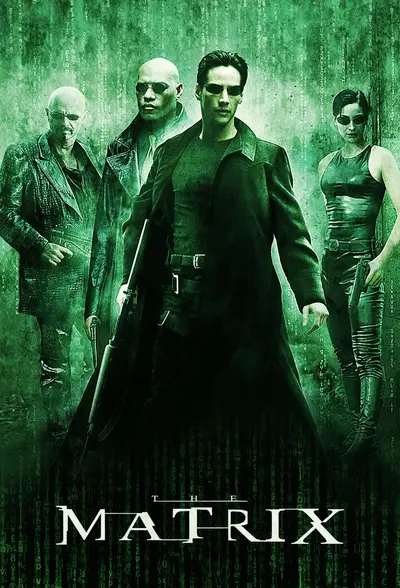
The Matrix

Film · 1999

InfluenceMEDIUM

The film names it twice in the first twenty minutes. Neo is told to follow the white rabbit, and Morpheus offers him the choice by saying he imagines Neo feels a bit like Alice tumbling down the rabbit hole. The borrowing is structural rather than decorative: an ordinary person crosses into a world whose rules are internally consistent and wrong, and the story is the business of learning them.

Lost

TV Series · 2004

InfluenceLOW

Lost names Carroll in its own structure. Episode titles include "White Rabbit" and "Through the Looking Glass", the season three finale, and the underwater station in that finale is the Looking Glass. The debt is the one those titles point at: castaways who fall into a place where the rules keep changing and have to work out what they are. Filed LOW: an allusion the writers chose, not a model for the plot.

About the work

Alice in Wonderland

Set in the Alice in Wonderland universe.

A young girl named Alice falls through a rabbit hole into a fantasy world of anthropomorphic creatures. It is seen as an example of the literary nonsense genre. One of the best-known works of Victorian literature, its narrative, structure, characters and imagery have had huge influence on popular culture and literature, especially in the fantasy genre.

Elsewhere in the Alice in Wonderland universe