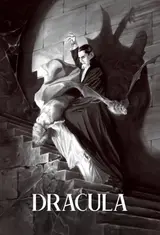
Caligari had a major influence on the American horror films of the 1930s, Dracula (1931) among them, with an antagonist who controls others by Caligari-like powers; its Expressionist look came to Universal through Murnau and Karl Freund.
Film· 1920· Horror
by Robert Wiene
Das Cabinet des Dr. Caligari (The Cabinet of Dr. Caligari): 4 recorded works trace back to it, and it draws on 1 recorded source.
Works that record this one as a source, with the evidence a contributor gave.
Caligari had a major influence on the American horror films of the 1930s, Dracula (1931) among them, with an antagonist who controls others by Caligari-like powers; its Expressionist look came to Universal through Murnau and Karl Freund.
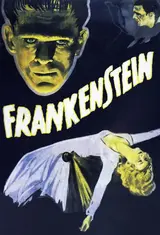
Anton Kaes wrote that Caligari's style, and the somnambulist Cesare in particular, influenced Universal's monster films such as Frankenstein (1931). Scholarly reading, hence LOW.
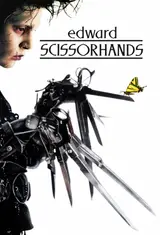
Edward's pale, dark-eyed, elongated look and the gothic mansion recall Cesare and the Expressionist sets of Caligari, a film Burton has named among his influences.

Anton Kaes lists Bride of Frankenstein among the Universal monster films shaped by Caligari's style and its Cesare. Scholarly reading, hence LOW.
Events, places, movements and ideas outside fiction that this work is recorded as drawing on.
Real world
Carl Mayer and Hans Janowitz wrote the script after the war; Mayer's examinations by a military psychiatrist, who he felt treated him as a malingerer, are often cited as the origin of Caligari.