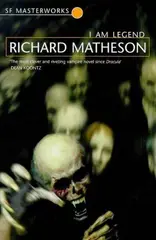
Richard Matheson got the idea for I Am Legend from seeing the 1931 Dracula as a teenager: if one vampire is frightening, what if the whole world were vampires?
Film· 1931· Horror
Dracula: 3 recorded works trace back to it, and it draws on 4 recorded sources.
Works that record this one as a source, with the evidence a contributor gave.
Richard Matheson got the idea for I Am Legend from seeing the 1931 Dracula as a teenager: if one vampire is frightening, what if the whole world were vampires?
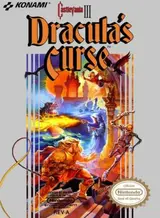
Castlevania was conceived as a playable Universal horror film, its first game opening like a movie and its castle filled with Dracula, Frankenstein's monster, the Mummy and other Universal monsters.
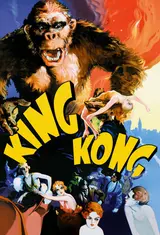
King Kong's makers took inspiration from Universal's monster films, Dracula among them, for its horror of a creature brought to a city.
The works this one is recorded as drawing on.
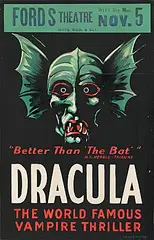
Universal bought the play's rights, not the book's, and the film shows it in every scene. Balderston is credited on the screenplay, Lugosi came straight from the Broadway production, Renfield again makes the journey to Transylvania in Harker's place, and the picture spends most of its running time in rooms because that is where the play had to spend its. This is the film that fixed what a vampire looks like. Evening dress and a Hungarian accent read as Dracula rather than as anything Stoker wrote, and every later vampire film is answering it.
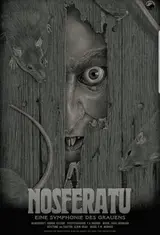
Murnau's film established what a vampire looks like ON SCREEN nine years before Universal's, and it did so as an unlicensed adaptation that Florence Stoker had the courts order destroyed. What survived into 1931 is atmosphere rather than plot: the arrival by ship with a dead crew and a log nobody lived to finish, the castle sequence as a mounting series of wrongnesses, and the idea that the vampire should be filmed as an infestation. Filed MEDIUM. Browning's film is made from the Deane and Balderston play, not from Murnau, and the two are opposite in style; the debt is to what Nosferatu proved a camera could do with the material.
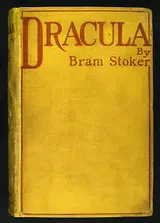
The Universal film, adapted via the 1924 Deane and Balderston stage play rather than straight from the novel, which is why it drops the ship, the asylum sequences and most of the last act. It is the version that fixed the count's evening dress, accent and manner in popular memory, none of which is in the book.
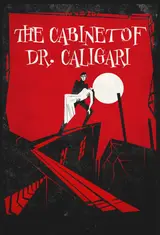
Caligari had a major influence on the American horror films of the 1930s, Dracula (1931) among them, with an antagonist who controls others by Caligari-like powers; its Expressionist look came to Universal through Murnau and Karl Freund.