BookSeries· 1965· Science Fiction

Dune

by Frank Herbert

Dune: 5 recorded works trace back to it, and it draws on 1 recorded source.

Open on the map

What Dune influenced

Works that record this one as a source, with the evidence a contributor gave.

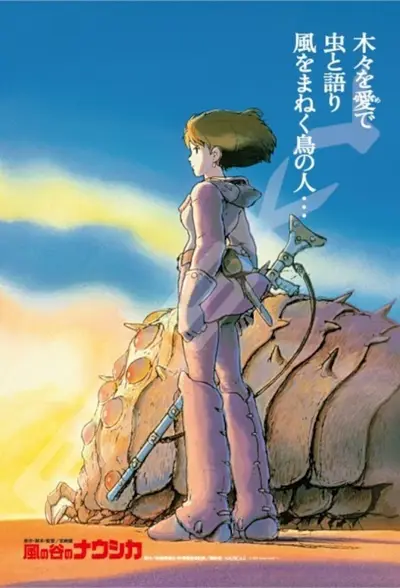
Miyazaki's Nausicaä shares Dune's ecological premise: a world after catastrophe, a poisoned environment that turns out to be restoring itself, giant creatures that humans misread as monsters (the Ohmu, like Herbert's sandworms), and a heroine who understands the ecology when the armies do not. HIGH : Hayao Miyazaki has officially acknowledged Frank Herbert's Dune as a major influence on Nausicaä of the Valley of the Wind.

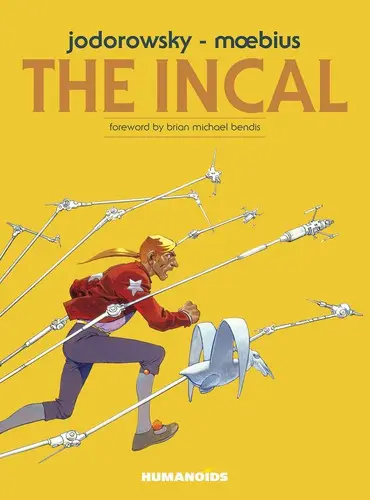
L'Incal The Incal

Comic · 1988

InfluenceMEDIUM

The Incal exists because Jodorowsky's Dune did not. He spent 1974 and 1975 building an adaptation of Herbert's novel with Moebius, Giger and Chris Foss, the production collapsed, and he and Moebius then reused the world they had designed for a comic of their own. What carries across is the furniture of Dune rather than its plot: a decayed galactic empire, a messiah who may be manufactured, a psychic order behind the throne, and a substance everything depends on. Filed MEDIUM and Worldbuilding/Visual on purpose. The story is Jodorowsky's own; the debt is to the designs and the cosmology he and Moebius drew for a film that was never finished, which is why it is recorded against the novel they were adapting.

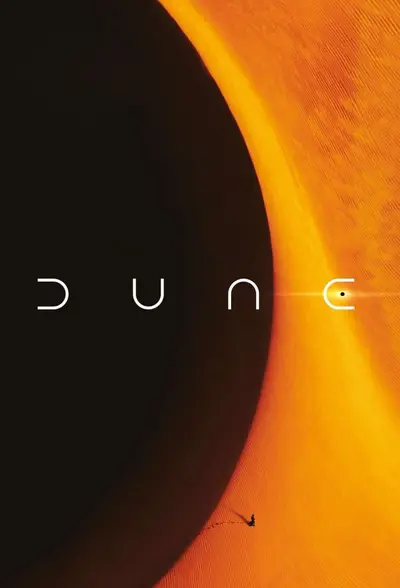
Dune

Film · 2021

AdaptationMEDIUM

Villeneuve’s Dune is not a literal, high-fidelity adaptation because it compresses the timeline, rewrites Chani, and cuts major characters like toddler Alia. However, it is deeply faithful to the book's core themes, capturing Frank Herbert's intended warning against charismatic leaders perfectly.

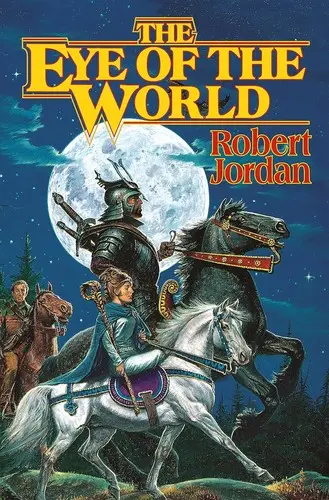
The Wheel Of Time

Book · 1990

InfluenceLOW

Jordan's debt to Tolkien is the one usually discussed, and the graph already holds it. Herbert supplies what Tolkien does not:

  • A prophesied messiah engineered by a centuries-old order of women, the Bene Gesserit and the Aes Sedai, breeding and steering toward a man who can do what they cannot
  • A protagonist terrified of the prophecy who tries to escape it, and whose ascension is treated as a catastrophe rather than as a happy ending
  • Ancestral memory as a usable faculty, and a desert people whose fanatical loyalty becomes the hero's most dangerous weapon

Filed as LOW. While the structural overlap in world-building is too precise for readers to ignore, Robert Jordan's explicit denial means it cannot be categorized as a definitive, conscious influence. As Jordan himself concluded:"No, there was no intention to make any similarities between Dune and my writings. And I am certainly a big fan of the original Dune novel. Although I doubt if I've read it since it first came out!" — From discussions on Science Fiction & Fantasy Stack Exchange and A Wheel of Time Wiki.

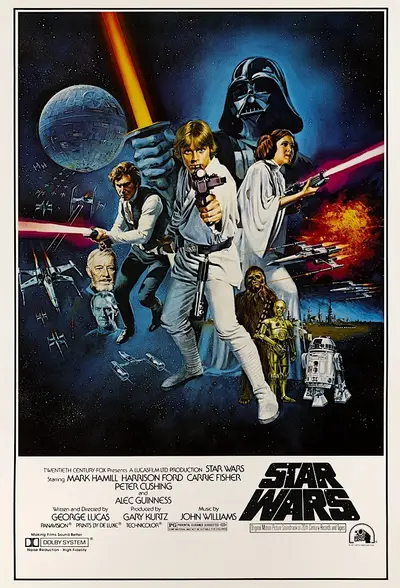
Star Wars

Film · 1977

InfluenceLOW

Documented parallel, not an acknowledged debt, and the difference is the whole reason this is LOW. The resemblances are extensive and often listed: a desert planet, a spice the galaxy depends on (Star Wars names the spice mines of Kessel), the hidden heir of a fallen noble house, a mystic order that bends minds with its voice, a galactic empire, desert natives, and a vast creature under the sand. What makes it worth recording is that Frank Herbert noticed. He is widely reported, in his son Brian's biography Dreamer of Dune, to have joked about founding a "We're Too Big to Sue George Lucas Society" with other science fiction writers. That is the author of the source registering the debt in public. Against that: Lucas has never named Dune. His stated sources are Flash Gordon, Burroughs, Kurosawa, Joseph Campbell and wartime aerial pictures, and the first two are already approved influences on this work here. Reject this if you want the map to carry only what a maker owned up to.
Real-world influences

Events, places, movements and ideas outside fiction that this work is recorded as drawing on.

Nature & Animals

Real world

Real-world influenceMEDIUM
  • Desert Ecology
  • Sand Dunes
  • Water Scarcity

Dune began as a magazine article about sand. In 1957 Frank Herbert went to Florence, Oregon, to write about a US Department of Agriculture project using poverty grasses to stop dunes burying the town and the highway. The article, They Stopped the Moving Sands, was never published, and the research turned into the novel. What came across is the method. Arrakis is built as an ecosystem rather than as a setting: the sandworms and the spice are a single life cycle, the Fremen stillsuits and windtraps are answers to a water budget, and Liet-Kynes is a planetary ecologist running a terraforming programme across generations. Herbert has said the book is about ecology first and that he wanted readers to understand a desert as a system. The appendix on the ecology of Dune is the argument stated outright.

About the work

Dune

This is a series.

Set on the desert planet Arrakis, Dune is the story of the boy Paul Atreides, heir to a noble family tasked with ruling an inhospitable world where the only thing of value is the "spice" melange, a drug capable of extending life and enhancing consciousness. Coveted across the known universe, melange is a prize worth killing for... When House Atreides is betrayed, the destruction of Paul's family will set the boy on a journey toward a destiny greater than he could ever have imagined. And as he evolves into the mysterious man known as Muad'Dib, he will bring to fruition humankind's most ancient and unattainable dream. A stunning blend of adventure and mysticism, environmentalism and politics, Dune won the first Nebula Award, shared the Hugo Award, and formed the basis of what is undoubtedly the grandest epic in science fiction.