Book· 1990· Science Fiction

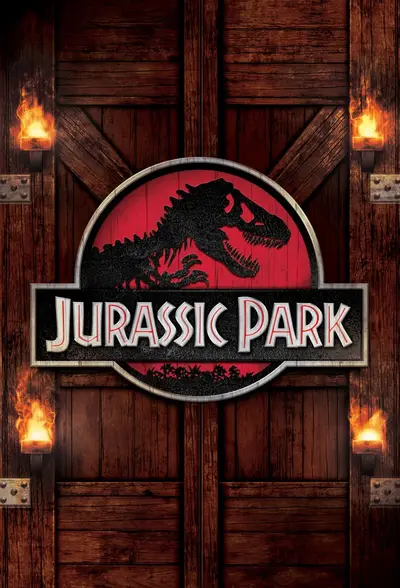
Jurassic Park

by Michael Crichton

Jurassic Park: 1 recorded work traces back to it, and it draws on 4 recorded sources.

Open on the map

What Jurassic Park influenced

Works that record this one as a source, with the evidence a contributor gave.

Jurassic Park

Film · 1993

AdaptationMEDIUM

Direct Adaptation. Steven Spielberg's 1993 film directly adapts the core premise and characters of Michael Crichton's novel. However, it alters major plot points, tones, and character fates to transform a dark thriller into a family-friendly adventure.

What influenced Jurassic Park

The works this one is recorded as drawing on.

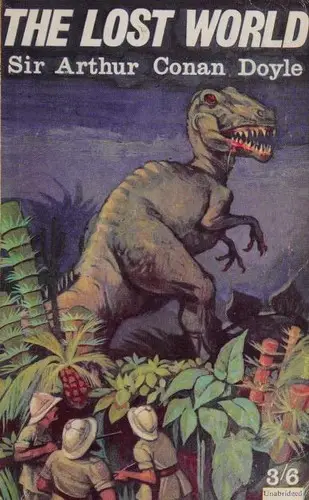
Professor Challenger

Book · 1912

InfluenceHIGH

⚠️ This is about THE LOST WORLD (1912), the first Challenger novel, which sits in this series rather than as its own node, so the connection is recorded here and the book is named. Conan Doyle invented the island, and it is the whole premise Crichton inherits: a bounded place cut off from the world where extinct animals are still alive, reached by an expedition that has to prove what it found. What carries across:

  • Living dinosaurs presented as a zoological fact to be documented rather than as a marvel, with the science argued on the page
  • A domineering scientist whose certainty drives the expedition and endangers it. Challenger and Hammond are the same man with different motives
  • The plateau as a closed system, which is what lets both books be about what happens when the boundary fails
  • A specimen brought back to civilisation, which is where Doyle ends and where The Lost World, Crichton's own sequel, begins

Crichton borrowed Doyle's title outright for that sequel in 1995, which is about as explicit as acknowledgement gets.

  • Scientists manipulate living organisms using cutting-edge science.
  • Explores the ethical limits of altering or creating life.
  • Scientific ambition outpaces moral responsibility.
  • Humanity attempts to control nature but ultimately loses control.
  • The creations behave according to their own instincts rather than their creators' intentions.
  • Isolated island setting used as a controlled scientific experiment.
  • The island becomes a deadly environment when the experiments fail.
  • Questions whether scientific capability justifies scientific action.
  • Science is portrayed as a source of both wonder and catastrophe.
  • Critiques the belief that humans can dominate evolution or natural processes.
  • Uses speculative science to explore contemporary scientific and ethical concerns.
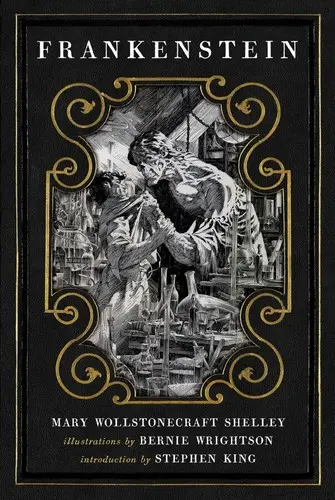
Frankenstein

Book · 1818

InfluenceMEDIUM
  • Scientists create life by using technology beyond accepted natural limits.
  • Explores the consequences of humanity attempting to control creation.
  • Warns against scientific progress pursued without ethical restraint.
  • The creators underestimate the autonomy and unpredictability of their creations.
  • Scientific hubris leads to disaster.
  • Questions whether humans should do something simply because they can.
  • The creator loses control of the very life they brought into existence.
  • The narrative serves as a cautionary tale about the unintended consequences of innovation.
  • Reframes Shelley's "playing God" theme through modern biotechnology and genetic engineering.

Real-world influences

Events, places, movements and ideas outside fiction that this work is recorded as drawing on.

Science & Technology

Real world

Real-world influenceHIGH
  • Paleontology

The novel is built on a specific scientific argument and takes a side in it. Crichton wrote it during the dinosaur renaissance, when Robert Bakker, John Ostrom and others were making the case that dinosaurs were fast, warm-blooded, socially complex animals related to birds rather than sluggish reptiles. That is the whole reason the book is frightening. The raptors hunt in coordinated packs, the tyrannosaur moves at speed, the animals are shown with bird behaviour, and Alan Grant is written as a Bakker-style palaeontologist who says so. Crichton consulted working palaeontologists, and the effect ran backwards: the film sent a generation into palaeontology, and the species it made famous, Velociraptor, was reassessed publicly afterwards in ways the book had already anticipated in outline.
About the work

Jurassic Park

A cautionary tale about genetic engineering, it presents the collapse of an amusement park showcasing genetically re-created dinosaurs to illustrate the mathematical concept of chaos theory and its real-world implications.