Film· 1954· Action

七人の侍 (Seven Samurai)

by 黒澤明 Akira Kurosawa

七人の侍 (Seven Samurai): 5 recorded works trace back to it.

Open on the map

What 七人の侍 (Seven Samurai) influenced

Works that record this one as a source, with the evidence a contributor gave.

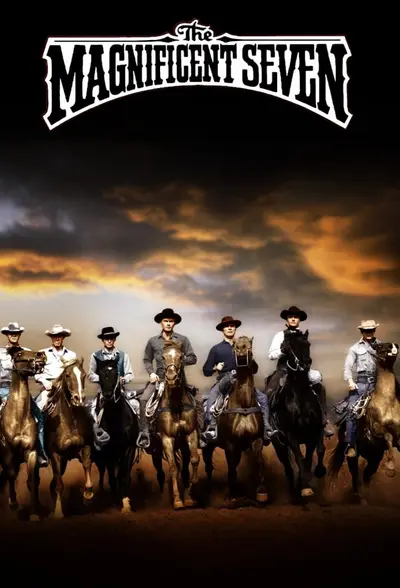
The Magnificent Seven

Film · 1960

RemakeHIGH

The licensed western remake of Kurosawa, moved from a Japanese farming village to a Mexican one, with gunfighters for ronin and the same structure intact: the recruitment, the training of the villagers, the defence, and the count of who is left. Kurosawa was reportedly pleased with it, which is worth recording given that his own film was built in part out of John Ford westerns. The line runs Ford to Kurosawa to Sturges and back to Leone, and this is the step that closes the circle.
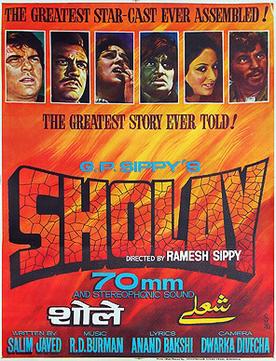
शोले Sholay

Film · 1975

InfluenceHIGH

Sholay's writers Salim-Javed built its premise on Seven Samurai and its remake The Magnificent Seven: a village terrorised by a bandit chief, and outsiders hired to defend it. A retired policeman hires two small-time crooks, Jai and Veeru, to bring him Gabbar Singh alive.

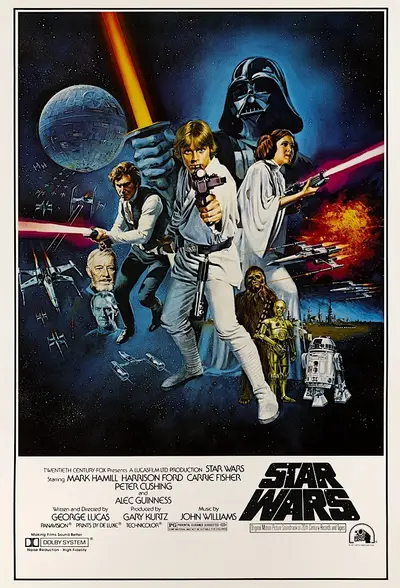
Star Wars

Film · 1977

InfluenceMEDIUM

Lucas has credited Kurosawa repeatedly and at length, and the debt reaches Star Wars in what a Jedi is: a masterless swordsman of a dying order, hired by farmers, whose code and whose obsolescence are the point. Obi-Wan is a ronin, and the lightsaber is filmed as a katana. The visual grammar comes with it: wipes between scenes, the held reaction shot, and costume built from hakama and kimono lines rather than from Western military uniform. Lucas names The Hidden Fortress most often of all, and that connection is recorded separately: the two bickering peasants who became R2-D2 and C-3PO, the princess moved in disguise through enemy country, the story told from the lowest characters up. The Hidden Fortress is on the map and carries that claim directly. This edge records the wider debt: Kurosawa is the source Lucas names most often, and Seven Samurai is where the ronin, the code and the obsolescence that made Obi-Wan possible are set out most fully.

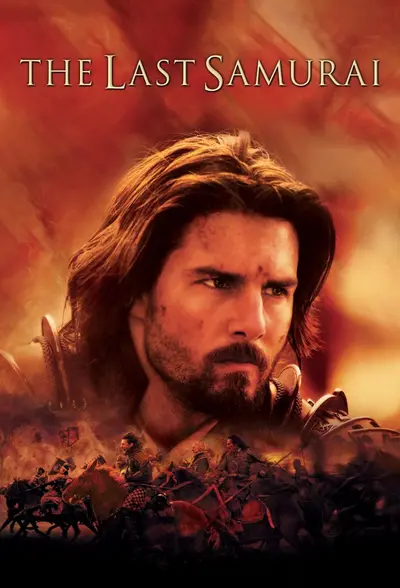
The Last Samurai

Film · 2003

InfluenceMEDIUM

The last Samourai is built on the international mythology of the samurai that Kurosawa created for the world, rather than historical Japanese texts. It inherits the genre's defining themes: a traditional warrior class rendered obsolete by rapid modernization, and a deep existential mourning for a passing era. Seven Samurai's ending famously states this theme first, when the surviving leader looks at the graves of his comrades and notes that the common people won, while the samurai lost. The Last Samurai re-stages that philosophical argument as an entire Hollywood plot, detailing the tragic erosion of feudal honor in the face of a changing world. Filed MEDIUM. The honest limit is that the debt is to Kurosawa broadly—with Seven Samurai carrying the core thematic weight on this map, while the visual tragedy of the futile cavalry charge against modern firearms echoes Kurosawa's later masterpiece, Kagemusha (1980).

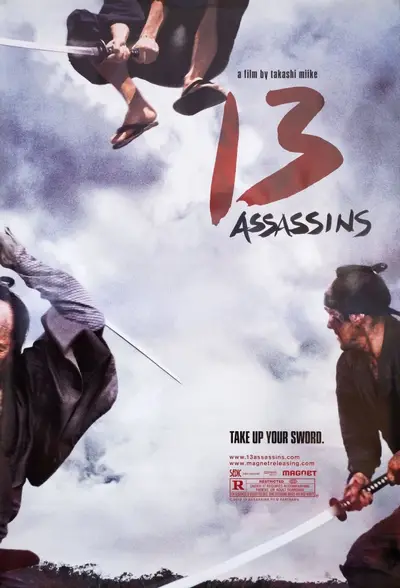
十三人の刺客 13 Assassins

Film · 2010

InfluenceMEDIUM

Both films are built on the same structure: a small band of swordsmen is recruited one at a time, prepares a village or a town for a battle it cannot win straight, and then fights it in a long final act that occupies the last third of the film. Miike's film is a remake of Eiichi Kudo's 1963 picture rather than of Kurosawa's, and that is the honest qualification on this line. The recruitment sequence, the fortified settlement, and the extended terminal battle are conventions Seven Samurai fixed for the jidaigeki, and 13 Assassins is working inside them deliberately, including the deaths distributed across the band.

About the work

七人の侍 (Seven Samurai)

Starring Toshirō Mifune, Takashi Shimura, Keiko Tsushima and Yukiko Shimazaki, it tells the story of a village of farmers who hire seven samurai to help defend their village from bandits who will return after the harvest to steal their crops. Influential in world cinema, Seven Samurai is considered to be one of the greatest films ever made.