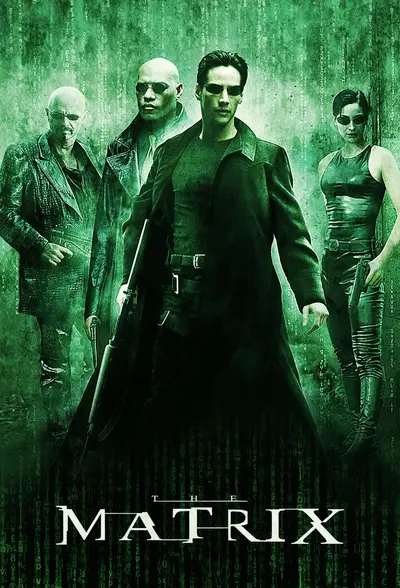
Before filming, the principal cast were given reading material so they would understand the philosophical ideas behind the film, and *Simulacra and Simulation* was on the list.
- The book is a prop in the film. Neo keeps his illegal discs inside a hollowed-out copy of it, open at the chapter On Nihilism, about four minutes in. It is not decoration: the philosophical key to the film is put on screen as an object.
- Jean Baudrillard's idea of simulacra (copies that no longer refer to an original reality) is the Matrix itself: humans live inside a constructed simulation that has replaced their awareness of the real world.
- The film explores his concept of hyperreality, where an artificial version of reality becomes more meaningful and believable than the actual world. The simulated 1990s inside the Matrix feels real to its inhabitants even though it is only a digital construction.
- Morpheus quotes him directly. "Welcome to the desert of the real" is taken from Baudrillard's writing, and carries his point that once the truth is known the real world can seem empty beside the constructed one people were used to.
- The question the film is built on is his: a copy with no original, a simulation that does not conceal a reality so much as remove the question of one.
- Baudrillard himself said the film had misunderstood him, which belongs on the record alongside the debt rather than instead of it.
- Worldbuilding Influence: helped inspire the idea of a simulated world replacing the real one.