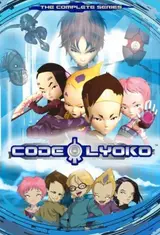
Code Lyoko's creators said The Matrix had an enormous influence on the pilot: a machine that lets the heroes dive into a virtual world, an operator who watches over them, and actions that carry over to the real world.
FilmSeries· 1999· Science Fiction
The Matrix: 9 recorded works trace back to it, and it draws on 7 recorded sources.
Works that record this one as a source, with the evidence a contributor gave.
Code Lyoko's creators said The Matrix had an enormous influence on the pilot: a machine that lets the heroes dive into a virtual world, an operator who watches over them, and actions that carry over to the real world.
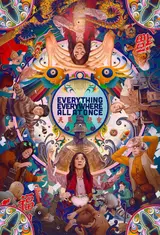
Both films take an ordinary person told that the life they are living is one of many, and both express the revelation as a sudden download of skills, which is the specific borrowing worth naming. Evelyn's verse-jumping gives her, in an instant, the abilities of a version of herself who trained for decades, and it is staged the way Neo's training is staged: the character stops, receives, and then moves differently. The Daniels also inherit the Wachowskis' habit of putting martial-arts choreography into a film about identity. Where they diverge is the ending, which turns on family rather than on a chosen one.
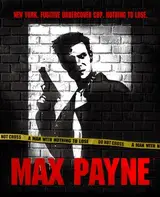
While Remedy Entertainment designed Max Payne’s slow-motion gunplay independently starting in 1997—inspired primarily by John Woo—the mechanic’s iconic name, "Bullet Time," was coined to capitalize on The Matrix's release two years earlier. The player manually slows down time to dodge and aim while fully-modeled bullets trace visible paths through the air, and Remedy successfully marketed the game by leaning heavily into the massive Matrix cultural hype.
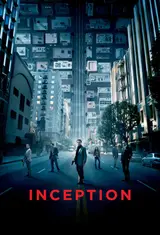
A commercial debt rather than a creative one, and worth filing as such. The Matrix proved that a studio action film could ask an audience to hold two levels of reality at once, which is the appetite Inception was greenlit into eleven years later. Nolan has not claimed it as a source, so this is LOW.
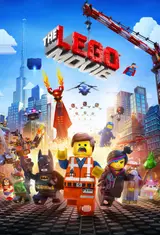
Phil Lord and Chris Miller named The Matrix among The Lego Movie's models: an ordinary man is told he is the prophesied Special and pulled out of a world that runs on instructions.
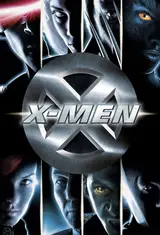
The X-Men's black leather uniforms were inspired by The Matrix, which studio executives felt would help the film succeed; later comic-book films copied the look.
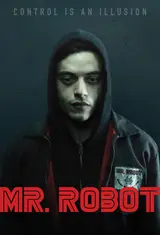
Sam Esmail has named The Matrix among the major influences on Mr. Robot, with Taxi Driver, American Psycho and A Clockwork Orange.

The Matrix, on which director Chad Stahelski was Keanu Reeves's stunt double, is among the action films John Wick drew on.
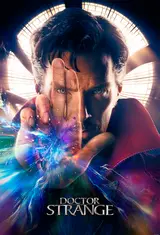
Kevin Feige wanted Doctor Strange's visuals to be a "Ditko/Kubrick/Miyazaki/The Matrix mind-trip".
The works this one is recorded as drawing on.
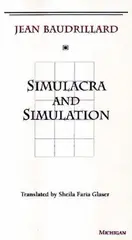
Before filming, the principal cast were given reading material so they would understand the philosophical ideas behind the film, and *Simulacra and Simulation* was on the list.

The Wachowskis showed Ghost in the Shell to Joel Silver and said they wanted to do that for real, which is the origin story the film's producers have repeated since. The borrowings are visible shot for shot: falling green code down a screen, a diver entering water as an image of entering a network, the plug at the base of the skull, and the thermo-optical camouflage that becomes bullet-time's cousin. The larger inheritance is the question, which both films treat as a thriller premise rather than as philosophy: if the mind can be edited and the body is hardware, what is left that is you.
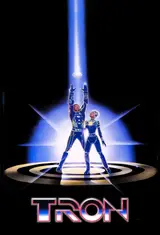
Tron is the first film to treat the inside of a computer as a PLACE with geography, inhabitants and laws rather than as a metaphor or a screen of text, and the cinematic vocabulary for digital worlds descends from that decision. What The Matrix takes is the premise that a person can be present inside the system as a body, subject to rules that bend for someone who understands the substrate, and that the system's enforcement appears as characters rather than as errors. Agents do what the MCP's programs do. Filed MEDIUM: an ancestor rather than a stated source. The Matrix's own citations are Baudrillard, Japanese animation and Hong Kong action cinema.
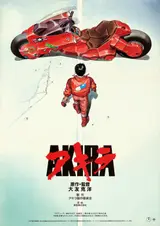
The Wachowskis handed producers Japanese animation as a reference rather than a storyboard pitch, and Akira is the film usually named alongside Ghost in the Shell when they describe what they wanted the picture to look like. What carries across is manner rather than plot: the neon rain-slick city shot from above, the way a body moves when it is doing something impossible, and the specific trick of holding on an ordinary object at high speed. Filed MEDIUM and Visual/Stylistic on purpose. Akira's story has almost nothing to do with The Matrix's; the debt is to how it looks and moves, which is exactly what those two subtypes are for.
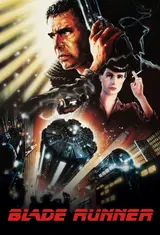
The rain-lit, permanently night city lit from below by advertising is Scott's, and by 1999 it was the default look of a film that wanted to say "future" without saying when. The thematic debt is narrower and real: both films make the audience doubt whether a character's memories are their own, and both answer with a test administered by an authority. The Voight-Kampff and the red pill are the same scene at different ends of the argument. Filed MEDIUM and Visual/Worldbuilding on purpose. The Matrix's structure comes from elsewhere, most of it from Hong Kong action cinema and Japanese animation.

The film names it twice in the first twenty minutes. Neo is told to follow the white rabbit, and Morpheus offers him the choice by saying he imagines Neo feels a bit like Alice tumbling down the rabbit hole. The borrowing is structural rather than decorative: an ordinary person crosses into a world whose rules are internally consistent and wrong, and the story is the business of learning them.