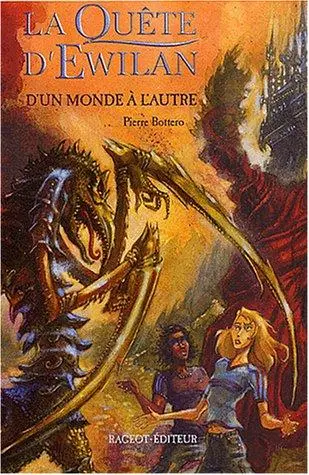
The Dessin and its relationship to creating/altering or accessing realities has been compared directly to Amber's reality-shaping/movement system. Bottero explicitly named Zelazny among the writers who shaped him.
BookSeries· 1972· Fantasy
The chronicles of Amber: 2 recorded works trace back to it, and it draws on 3 recorded sources.
Works that record this one as a source, with the evidence a contributor gave.
The Dessin and its relationship to creating/altering or accessing realities has been compared directly to Amber's reality-shaping/movement system. Bottero explicitly named Zelazny among the writers who shaped him.
Gary Gygax lists it in Appendix N of the 1979 Advanced Dungeons & Dragons Dungeon Master's Guide, his published list of the fiction that shaped the game. Roger Zelazny is listed for the Amber series, whose true world casting countless Shadows beneath it, walked between by those who know how, belongs to the same multiverse thinking that shaped the game's planes.
The works this one is recorded as drawing on.
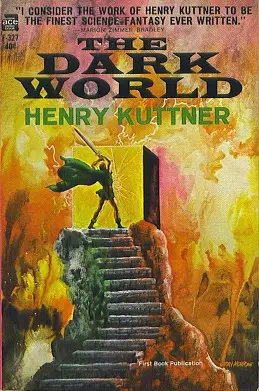
Roger Zelazny named Henry Kuttner's The Dark World as a direct influence on Amber, and the resemblance he was acknowledging is specific. Shared:
Filed MEDIUM. Zelazny took a starting position from Kuttner and then built the thing Amber is actually known for, the Pattern and the shadow worlds, which has no equivalent in The Dark World.
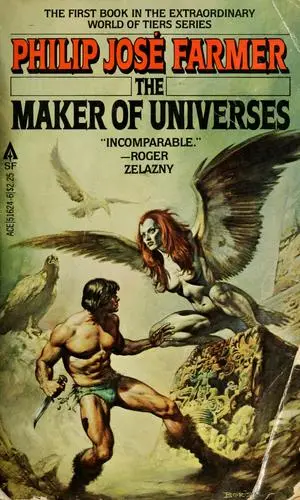
Farmer's sci-fi/fantasy series follows immortal, human-like "Lords" who construct their own artificial, customized pocket universes and battle each other for dominance. Zelazny took this conceptual framework to create the multiverse of Shadow. Amber and the Courts of Chaos are the two fixed realities, while everything in between consists of infinite, parallel worlds. The royal siblings act exactly like Farmer's squabbling, god-like Lords—possessing the unique power to manipulate, traverse, and rule over these lesser realities.

Durrell’s series features four novels that retell the exact same sequence of events in Alexandria from the vantage points of different characters. Zelazny used this technique to master the unreliable narrator. In the first five books (The Corwin Cycle), everything is filtered through Corwin's personal biases, lies, and flawed memories. The reader gradually learns (just as in Durrell's work) that reality changes entirely depending on who is telling the story.