
The Duffer brothers have named John Carpenter among their models, and The Thing is on the wall: its poster hangs in Mike's basement in the first season. The Demogorgon's practical-effects body horror is in the tradition Carpenter's film established.
Film· 1982· Horror
The Thing: 4 recorded works trace back to it, and it draws on 3 recorded sources.
Works that record this one as a source, with the evidence a contributor gave.
The Duffer brothers have named John Carpenter among their models, and The Thing is on the wall: its poster hangs in Mike's basement in the first season. The Demogorgon's practical-effects body horror is in the tradition Carpenter's film established.

Ryan Coogler has called The Thing one of his favourite films and Sinners restages its blood test: trapped in the juke joint, the survivors use garlic to find out which of them is no longer themselves.

Among Us is often compared to John Carpenter's The Thing: an isolated crew in which one or more members is a killer imitating a crewmate.
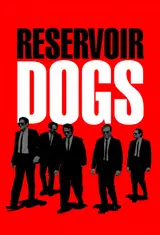
Tarantino cited The Thing as an inspiration for Reservoir Dogs: men shut in together, each suspecting the others.
The works this one is recorded as drawing on.
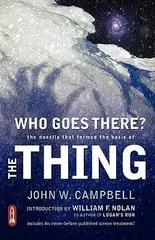
Carpenter's film is credited on screen as based on Campbell's novella, and it is the second adaptation of it: Howard Hawks and Christian Nyby filmed it in 1951 as The Thing from Another World, which turned the creature into a humanoid and dropped the part Carpenter kept. What the 1982 film restores from the page is the premise the 1951 one abandoned:
The ending is Carpenter's own. Campbell lets his men win.
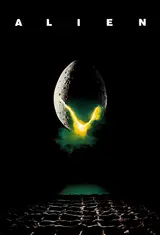
Carpenter's film was made in the window Alien opened, and reviewers at the time treated them as siblings: an isolated crew, no way out, a creature that uses the bodies it kills, and practical effects designed to be looked at rather than glimpsed. The shared ancestor matters too. Both descend from Campbell's Who Goes There? by way of the 1951 film, and O'Bannon acknowledged the 1951 version among Alien's sources, so this is partly a family resemblance. Filed MEDIUM for exactly that reason: what Alien supplied was commercial permission and a standard for creature work, not the story, which Carpenter had from Campbell.
Carpenter has named Lovecraft as a formative influence repeatedly and made In the Mouth of Madness explicitly about him, so the reading is his own rather than one imposed on him. What the film takes that Campbell's novella does not supply is the visceral, chaotic body horror of the entity itself. While Campbell (Who Goes There?) invented the ancient spaceship and the million-year timeline, the amorphous flesh-fusions, sprouting tentacles and Rob Bottin's shifting monstrosities belong to Lovecraft's shoggoth register rather than a standard 1930s sci-fi story.