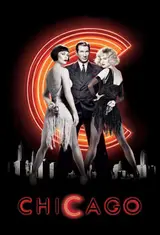
Both are Bob Fosse's: he directed the 1975 Chicago on Broadway after winning the Oscar for Cabaret, and his jazz choreography, numbers staged as vaudeville in a character's mind, carries into the 2002 film.
Film· 1972· Musical
by Bob Fosse
Cabaret: 4 recorded works trace back to it, and it draws on 3 recorded sources.
Works that record this one as a source, with the evidence a contributor gave.
Both are Bob Fosse's: he directed the 1975 Chicago on Broadway after winning the Oscar for Cabaret, and his jazz choreography, numbers staged as vaudeville in a character's mind, carries into the 2002 film.
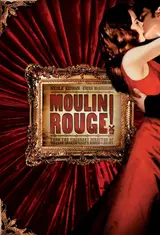
A critics' reading. Moulin Rouge! borrows from Cabaret's way of cutting between the nightclub stage and the story outside it, songs commenting on the drama.

Bill Condon cited Cabaret as a source of inspiration for his film of Kander and Ebb's Kiss of the Spider Woman.
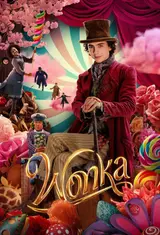
King named Cabaret, with Oliver!, Bugsy Malone and Annie, as inspirations for the film's musical style.
The works this one is recorded as drawing on.
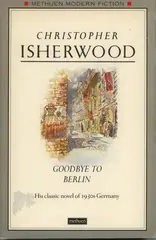
Bob Fosse's film is the end of a chain that starts with Isherwood's book: John Van Druten's play I Am a Camera (1951) dramatised it, and the 1966 musical Cabaret was built on the play. The film credits the musical, the play and Isherwood's stories, and its central character, Sally Bowles, played by Liza Minnelli, comes from the book's section of that name.
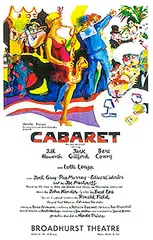
Bob Fosse's film adapts the Kander and Ebb musical about Sally Bowles and the Kit Kat Klub in Weimar Berlin as the Nazis rise. It keeps songs only for performances on the club's stage, cuts others, adds new ones, and returns to Isherwood's stories for its secondary characters.
Events, places, movements and ideas outside fiction that this work is recorded as drawing on.
Real world
Set in a Berlin nightclub in 1931, the film follows Sally Bowles as the Weimar Republic gives way to the rise of the Nazis.