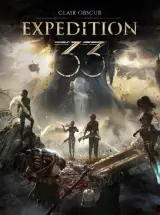
Director Guillaume Broche named Final Fantasy VI to X among the JRPGs behind Clair Obscur's turn-based combat and party structure.
Video GameSeries· 1987· RPG
by 坂口博信 Hironobu Sakaguchi
ファイナルファンタジー (Final Fantasy): 5 recorded works trace back to it, and it draws on 4 recorded sources.
Works that record this one as a source, with the evidence a contributor gave.
Director Guillaume Broche named Final Fantasy VI to X among the JRPGs behind Clair Obscur's turn-based combat and party structure.
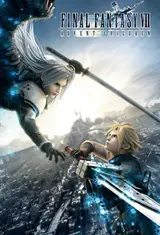
Advent Children is set two years after Final Fantasy VII and continues Cloud's story.
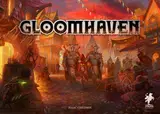
Isaac Childres credited fantasy works including Final Fantasy and Diablo, as well as Willow and Labyrinth, among Gloomhaven's inspirations.
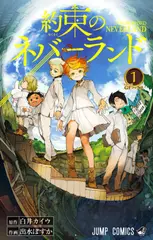
Kaiu Shirai drew on international children's folklore and on video games such as Final Fantasy for The Promised Neverland's setting.

Toby Fox set Undertale against Final Fantasy: "all monsters in RPGs like Final Fantasy are the same ... there's no meaning to that".
The works this one is recorded as drawing on.
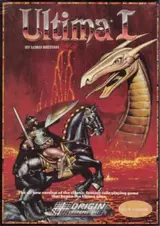
Sakaguchi has named Ultima and Wizardry as the games Final Fantasy was built from, and the split is usually described the same way: Wizardry supplied the first-person party combat, Ultima supplied the overworld. Concretely that means a top-down map walked between towns and dungeons, shops and inns, a party of classes chosen at the start, and a story told by talking to townspeople. The Japanese console RPG is these two American computer games rebuilt for a controller and a cartridge. Dragon Quest sits in the middle of this line and is not yet on the map, which a moderator may want to note.
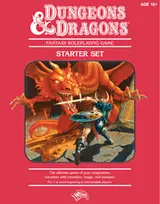
Hironobu Sakaguchi has named Dungeons & Dragons, along with Wizardry and Ultima, as what he was working from, and the first game reads as a translation of a tabletop party into a console. Four characters with chosen classes, hit points, a spell list bought in advance and spent per level, and a random-encounter overworld that is a dungeon master rolling. Black Mage and White Mage are the cleric-and-magic-user pair with the serial numbers filed off.
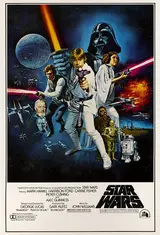
The series' recurring pair Biggs and Wedge are named after Luke's fellow X-wing pilots, and have appeared under those names since Final Fantasy VI. Final Fantasy II, the second game, built its plot on a rebel alliance fighting an empire. Filed LOW: homage and a borrowed frame rather than a model for the series.
Nobuo Uematsu was inspired by The Rite of Spring to write a more "classical" track for Final Fantasy VII.