
Scott Derrickson said the mirror dimension chase set out to take Inception's folding-city effects "to the Nth degree and take it way more surreal and way farther".
Film· 2010· Science Fiction
Inception: 1 recorded work traces back to it, and it draws on 7 recorded sources.
Works that record this one as a source, with the evidence a contributor gave.
Scott Derrickson said the mirror dimension chase set out to take Inception's folding-city effects "to the Nth degree and take it way more surreal and way farther".
The works this one is recorded as drawing on.

Christopher Nolan told The New York Times that Borges was the probable inspiration for Inception. Ficciones holds 'The Circular Ruins', in which a man dreams another into being, and 'The Secret Miracle', a lifetime lived inside a moment.

Widely observed, never acknowledged, and filed LOW for exactly that reason. The parallels are specific: a device that lets one person enter another's dream, a corridor that becomes the wrong way up, a mirror opened as a door between states, and a character falling to wake. Against it: Nolan has said he wrote Inception over roughly ten years and has named architecture, heist films and his own Following as sources, not Kon. Satoshi Kon died in 2010 and made no claim.
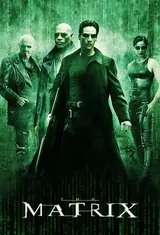
A commercial debt rather than a creative one, and worth filing as such. The Matrix proved that a studio action film could ask an audience to hold two levels of reality at once, which is the appetite Inception was greenlit into eleven years later. Nolan has not claimed it as a source, so this is LOW.

Inception's ski chase was inspired by Nolan's favourite Bond film, On Her Majesty's Secret Service, for its "balance of action and scale and romanticism and tragedy".

Nolan said Inception came from the era of reality-bending films, The Matrix, Dark City, The Thirteenth Floor "and, to a certain extent, Memento".

Nolan built the rotating corridor for the zero-gravity fight on the technique Kubrick used for the centrifuge in 2001.
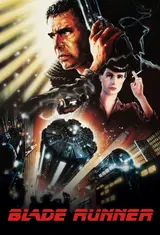
Christopher Nolan drew on Borges and on the films Blade Runner and The Matrix for Inception.