Play· 1904· Fantasy

Peter Pan, or The Boy Who Wouldn't Grow Up

by J. M. Barrie

Peter Pan, or The Boy Who Wouldn't Grow Up: 3 recorded works trace back to it, and it draws on 3 recorded sources.

Open on the map

What Peter Pan, or The Boy Who Wouldn't Grow Up influenced

Works that record this one as a source, with the evidence a contributor gave.

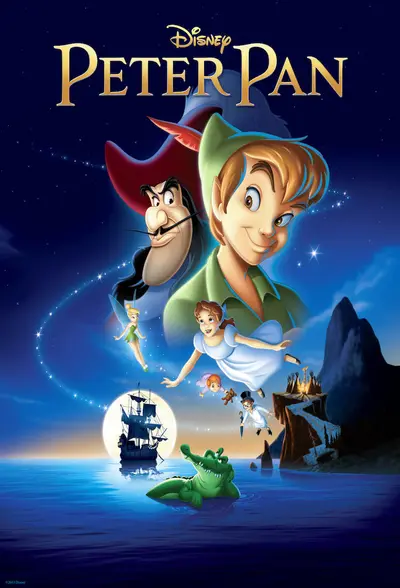
Peter Pan

Animation · 1953

AdaptationHIGH

Disney's film adapts Barrie's play rather than the 1911 novel he later made from it, and the stage origin shows in what the film keeps: the nursery, the flight out of the window, the pirates, and the appeal to the audience about believing in fairies. The film's depiction of the Neverland Indians is the part now carrying a content warning on Disney's own platform, and it is an intensification of what the play does rather than an invention of the film.

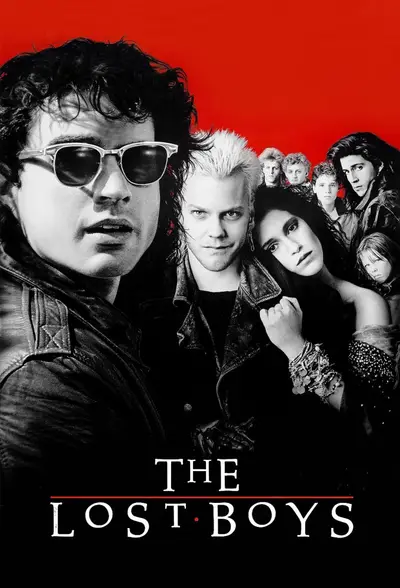
The Lost Boys

Film · 1987

InfluenceMEDIUM

The film takes its title and its idea from Barrie: the Lost Boys are boys who never grow up, and the vampire gang are that idea made literal, eternally young and eternally out at night. The original concept was a vampire version of Peter Pan's Lost Boys.

What influenced Peter Pan, or The Boy Who Wouldn't Grow Up

The works this one is recorded as drawing on.

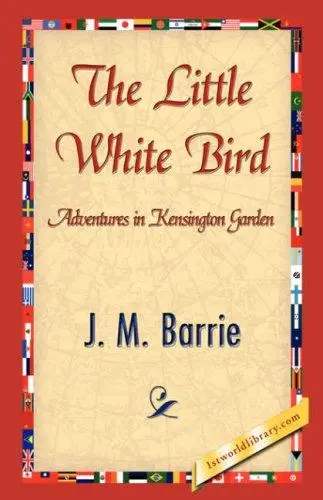
Peter Pan first appears here, in chapters 13 to 18 of a novel written for adults, as a week-old infant who flies out of his nursery window and lives among the birds and fairies of Kensington Gardens. There is no Neverland, no Hook, no Darlings and no Wendy. The play takes the character and invents almost everything around him. Filed as an adaptation because the source is real and Barrie is adapting himself, but MEDIUM rather than HIGH because what gets adapted is a six-chapter episode rather than a book: the pirates, the Lost Boys and the crocodile are the play's own. The chain runs on from here. The play was novelized in 1911 as Peter and Wendy, which the graph already holds.

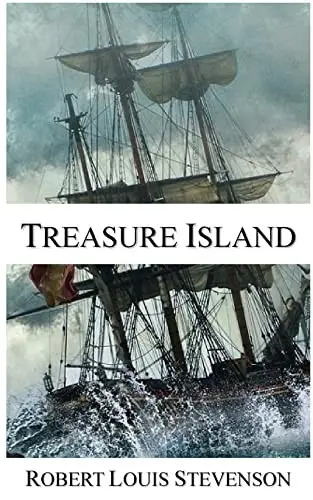
Treasure Island

Book · 1883

InfluenceMEDIUM

Barrie's pirates are Stevenson's pirates, and Barrie knew it. The two men corresponded, and Barrie later wrote that Hook was his attempt at the kind of villain Stevenson had made possible. The inheritance is concrete: Hook is described as having served as Long John Silver's boatswain, which makes the debt part of the text rather than a resemblance. Neverland's lagoon, the marooning, the pirate ship as a place children are taken to, and the crocodile as the thing that finally comes for the captain are all built on Treasure Island's furniture. Filed MEDIUM: an acknowledged formative influence.

About the work

Peter Pan, or The Boy Who Wouldn't Grow Up

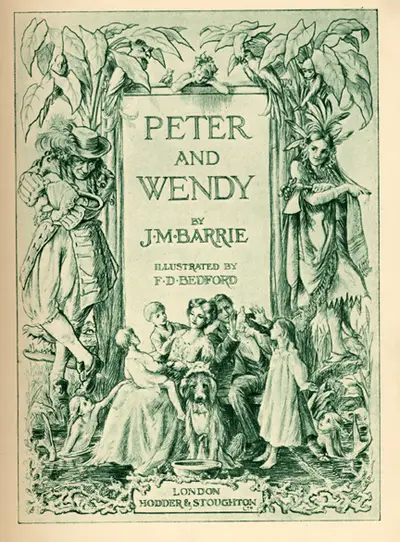
Peter Pan; or, The Boy Who Wouldn't Grow Up, often known simply as Peter Pan, is a work by British novelist J. M. Barrie, in the form of a 1904 play and a 1911 novel titled Peter and Wendy. Both versions tell the story of Peter Pan, a mischievous little boy who can fly, and has many adventures on the island of Neverland that is inhabited by mermaids, fairies, Native Americans and pirates. The Peter Pan stories also involve the characters Wendy Darling and her two younger brothers John and Michael, Peter's fairy Tinker Bell, the Lost Boys, and the pirate Captain Hook. The play and novel were inspired by Barrie's friendship with the Llewelyn Davies family. The play debuted at the Duke of York's Theatre in London on 27 December 1904 with Nina Boucicault, daughter of the playwright Dion Boucicault, in the title role. A Broadway production was mounted in 1905 starring Maude Adams. It was later revived with such actresses as Marilyn Miller and Eva Le Gallienne. Barrie continued to revise the play for years after its debut until publication of the play script in 1928, under the name Peter Pan; or, The Boy Who Would Not Grow Up.